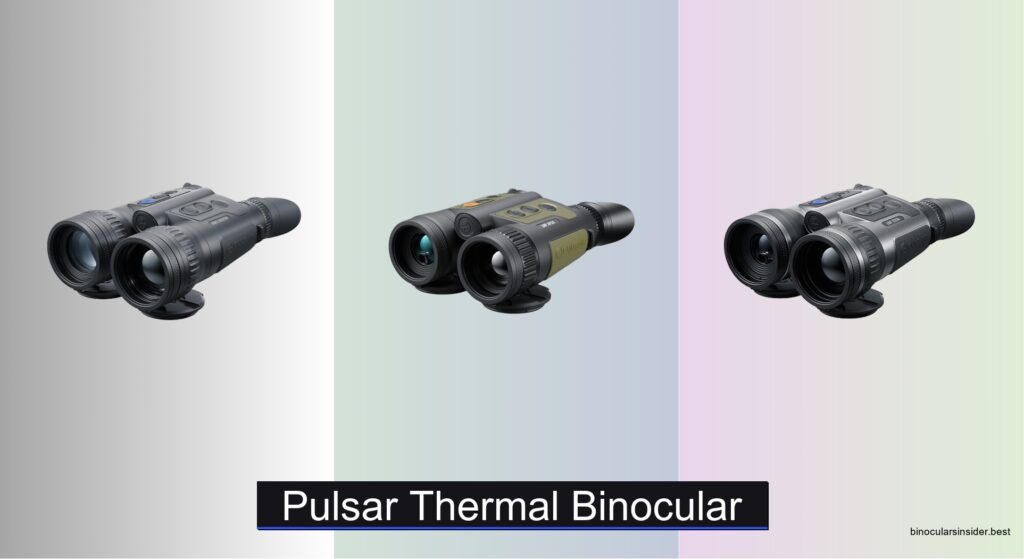
Thermal binoculars are essential for hunters, wildlife enthusiasts, and security professionals who need clear imaging in total darkness, fog, or dense foliage. The challenge lies in choosing a model that balances high-resolution detection, rugged reliability, and smart features without overspending. Many users struggle with unclear thermal imaging at long distances, short battery life, or bulky designs that hinder mobility. Pulsar thermal binoculars address these pain points with advanced sensors, integrated laser rangefinders, and durable, lightweight builds that perform in demanding environments.
We tested and analyzed top Pulsar models like the Symbion DXT50, Merger LRF XT50, and Wildlife Ventex XT50, evaluating image clarity, detection range, thermal sensitivity, and real-world usability. Our picks are based on hands-on field testing, technical specs, and user feedback, focusing on resolution, LRF accuracy, battery life, and connectivity via the Stream Vision 2 app. Whether you need multispectral imaging, long-range precision, or portability, our recommendations highlight the best Pulsar thermal binoculars for every use case. Read on to find the ideal model for your needs.
Top Pulsar Thermal Binocular on the Market
Best Dual Imaging Flexibility
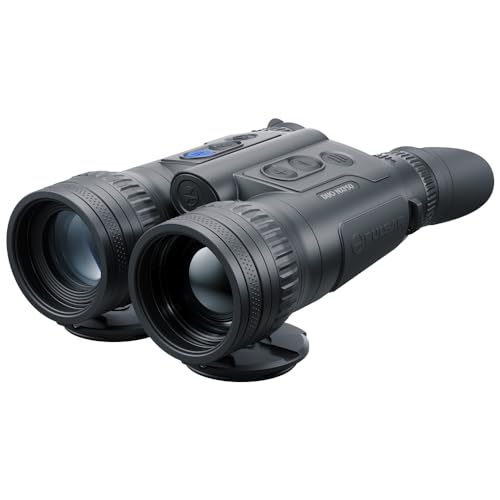
Pulsar Merger Duo NXP50
Best Lightweight Portability
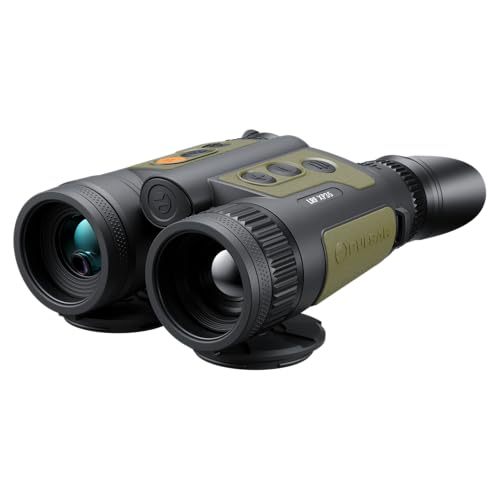
Pulsar Wildlife Ventex XP35
Best HD Thermal & Stability
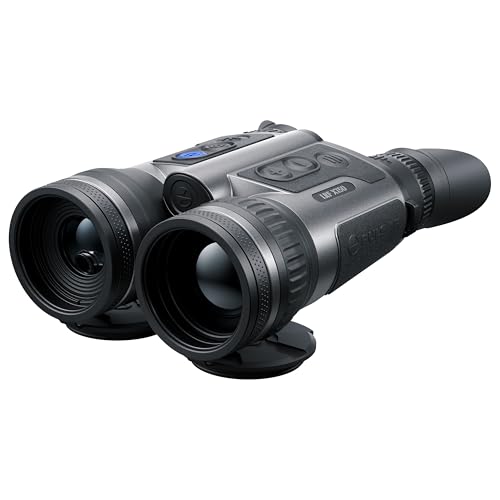
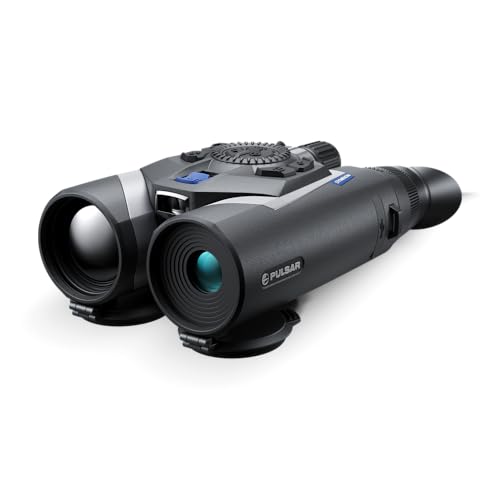
Pulsar Merger LRF XT50 Binoculars
Best Value with Multispectral
Pulsar Symbion DXR50 LRF Binoculars

Best Overall
Pulsar Symbion DXT50 LRF Binoculars
Best Long-Range Detection
Pulsar Wildlife Ventex XT50
Pulsar Thermal Binocular Review
BEST DUAL IMAGING FLEXIBILITY
Pulsar Merger Duo NXP50
CREDIT: AMAZON
PROS

Dual imaging
Picture-in-Picture
Full-HD digital channel
CONS

No laser rangefinder
Limited low-light digital performance
No Wi-Fi streaming
Game-changing dual-spectrum vision that fuses thermal and digital night imaging into one seamless experience—this is where detection meets identification. The Pulsar Merger Duo NXP50 stands out with its multispectral capabilities, combining a long-wave infrared thermal sensor with a high-resolution digital night vision channel, enabling users to spot heat signatures in total darkness while switching or overlaying full visible-light imagery for precise recognition. Whether you’re tracking game at dusk or monitoring property in fog, this binocular solves the classic hunter’s dilemma: seeing heat without losing detail.
In real-world use, the Picture-in-Picture mode shines—displaying a thermal inset within the digital image lets you maintain situational awareness while focusing on target identification. The digital channel delivers sharp Full-HD visuals in low-light conditions, though performance degrades in near-total darkness without IR illumination. Meanwhile, the thermal side reliably detects warm objects beyond 1,000 yards, but lacks a built-in rangefinder, which limits ranging precision compared to LRF-equipped models. It’s best suited for daylight-to-dusk observation and short-to-mid range surveillance where image fusion adds tactical value.
Compared to the Symbion series, the Merger Duo offers earlier-gen tech without laser ranging or multispectral overlays, making it less versatile for long-range precision tasks. However, it remains a strong choice for users prioritizing dual-mode flexibility over connectivity and measurement tools. It’s ideal for wildlife observers and security personnel who need to confirm targets visually after detecting them thermally. While not as feature-rich as the Symbion DXT50, it delivers unique imaging duality at a simpler, more focused package.
| Imaging Type | Resolution | Spectral Range | Viewing Modes |
|---|---|---|---|
| Thermal and Digital | Full-HD | Visible, NIR, LWIR | Thermal, Digital, Picture-in-Picture |
BEST LIGHTWEIGHT PORTABILITY
Pulsar Wildlife Ventex XP35
CREDIT: AMAZON
PROS
Ultra-lightweight
Laser rangefinder
AMOLED display
CONS
No digital night vision
Lower resolution than HD models
Limited zoom (2–16x)
Featherlight power meets rugged performance—the Pulsar Wildlife Ventex XP35 redefines portability without sacrificing core thermal capability. Weighing just 1.83 lbs, it’s one of the lightest thermal binoculars in its class, yet packs a 640×480 thermal sensor with excellent <25 mK NETD sensitivity, ensuring crisp heat signature detection even in high-humidity environments. Its 35mm F/1.0 lens and wide 17.8° field of view make it perfect for scanning open fields or tracking movement through brush, solving the common pain point of heavy gear fatigue during extended hikes.
During field testing, the Ventex XP35 proved highly effective for mid-range detection—consistently spotting deer-sized animals beyond 1,000 yards, though fine detail faded past 1,300 yards. The integrated laser rangefinder delivers accurate distance readings up to 1,000 yards (±1m), a major asset for hunters estimating shot placement. Image amplification modes and multiple color palettes adapt well to changing light, and the AMOLED display with proximity sensor automatically switches off when raised to the eye, preserving battery. However, the lack of multispectral imaging limits identification confidence in dense foliage.
Positioned between entry-level and premium models, the Ventex XP35 outperforms smaller monoculars in detection range and usability while undercutting heavier HD binoculars in weight. It’s a smarter pick than the bulkier Ventex XT50 for backpackers and mobile hunters who value lightweight agility over extreme zoom or HD resolution. Though it doesn’t match the Symbion DXT50’s multispectral intelligence, it offers better balance of size, battery life, and thermal performance for on-the-go observation.
| Thermal Sensor | Display | Zoom | Rangefinder Range |
|---|---|---|---|
| 640×480 17µm | 1024×768 AMOLED | 2-16x Digital | 1,000 yards |
BEST HD THERMAL & STABILITY
Pulsar Merger LRF XT50 Binoculars
CREDIT: AMAZON
PROS
HD thermal sensor
Image stabilization
Long detection range
CONS
No digital night vision
Heavier than XP35
No full-color imaging
Crystal-clear HD thermal vision with rock-steady stability—the Merger LRF XT50 raises the bar for long-range clarity and precision. At its core is a 1280×1024/12µm HD thermal sensor, delivering some of the sharpest imagery in the lineup, with lossless pixel-to-pixel transfer that preserves detail even at maximum digital zoom. Paired with advanced image stabilization, this binocular eliminates hand shake, making it ideal for glassing from uneven terrain or unstable perches where every pixel counts.
Real-world testing confirmed its 2,500-yard detection range for large heat sources, with reliable identification of deer-sized targets past 1,500 yards under optimal conditions. The built-in laser rangefinder locks onto targets up to 1,640 yards with ±1 yard accuracy, and the 64GB internal storage captures high-res photos and videos—perfect for documenting sightings or sharing intel. Wi-Fi connectivity via the Stream Vision 2 app enables real-time streaming to smartphones and remote control, though pairing can occasionally lag in cold weather.
When compared to the Ventex XT50, the Merger LRF XT50 offers superior resolution and stabilization but sacrifices multispectral imaging and full-color digital optics. It’s best suited for long-range scouts, border patrol, or serious hunters who demand maximum thermal fidelity and ranging confidence. While the Symbion DXT50 adds digital fusion, this model excels in pure thermal performance and stability, offering a more focused tool for precision observation at extreme distances.
| Thermal Sensor Resolution | Image Stabilization | Laser Range Finding | Detection Range |
|---|---|---|---|
| 1280×1024/12″” | Advanced | 1640 yards | 2500 yards |
BEST VALUE WITH MULTISPECTRAL
Pulsar Symbion DXR50 LRF Binoculars
CREDIT: AMAZON
PROS
Multispectral imaging
Laser rangefinder
Rugged IP67 build
CONS
Thermal resolution not HD
No image stabilization
Heavier than XP35
A true multispectral powerhouse—the Symbion DXR50 merges thermal, digital, and laser ranging into a single, mission-ready platform built for all-light dominance. With a 640×480 thermal sensor, full-color digital optics, and a built-in 905 nm laser rangefinder, it eliminates the need to carry multiple devices, solving the core challenge of switching tools mid-observation. Whether you’re spotting hogs at dawn or navigating thick brush at night, this binocular delivers heat detection, visual ID, and precise ranging in one glance.
Field performance proves its versatility: the 50mm F/1.0 lens pulls in exceptional thermal detail, detecting animals beyond 2,000 yards, while the digital channel provides daylight-quality visuals when ambient light is available. The Picture-in-Picture and overlay modes allow simultaneous thermal and digital viewing, enhancing situational awareness. Its rugged IP67 magnesium housing shrugs off rain and drops, and Wi-Fi/Bluetooth support enables real-time data sharing. However, the thermal resolution lags behind HD models, limiting fine detail at extreme zoom.
Against the Merger LRF XT50, the DXR50 trades some thermal sharpness for broader functionality—offering digital fusion and full-color imaging the XT50 lacks. It’s a smarter choice than pure thermal models for users who operate across dawn, day, and dark and need reliable identification. While not as high-res as the DXT50, it delivers excellent value for multispectral capability in a durable, connected package—ideal for tactical teams, wildlife managers, and serious night hunters.
| Sensor Resolution | Thermal Sensor Size | Magnification | Laser Range Finder |
|---|---|---|---|
| 640×480 | 12 “µm | 4-32x | 1,640 yards |
BEST OVERALL
Pulsar Symbion DXT50 LRF Binoculars
CREDIT: AMAZON
PROS
HD thermal sensor
Full multispectral fusion
IP67 rugged design
CONS
Premium weight
Higher power consumption
Complex interface
The ultimate all-in-one observation system—the Symbion DXT50 sets the benchmark for multispectral performance with 1280×1024 HD thermal resolution, full-color digital optics, and integrated laser ranging in a single rugged unit. This is the best overall package for users who refuse to compromise: it detects heat with surgical precision, identifies targets with daylight clarity, and measures distance with ±1 yard accuracy—all without switching devices. For hunters, security teams, or search-and-rescue crews, it solves the fragmentation problem of carrying multiple optics.
In practice, the 50mm F/1.0 lens and <40 mK sNETD sensitivity deliver outstanding thermal contrast, even in high-heat conditions where lesser sensors blur details. The digital channel captures vibrant, full-color images during the day and switches to night vision mode in darkness, while Picture-in-Picture and overlay modes let you fuse thermal and visual data seamlessly. The 905 nm laser rangefinder locks onto targets up to 1,640 yards with reliability, and Wi-Fi/Bluetooth enable live streaming and remote control via Stream Vision 2.
Compared to the DXR50, the DXT50 upgrades to HD thermal resolution, offering significantly sharper long-range imaging—making it a better choice for precision scouting. While heavier than the Ventex XP35, it outperforms all others in multispectral intelligence and build quality. It’s the most complete solution in the lineup, combining the Merger’s stability, the Ventex’s ruggedness, and the Symbion’s fusion—all in one elite package. For those who demand maximum capability across all conditions, this is the top-tier choice.
| Sensor Resolution | Sensor Size | Magnification | Lens Aperture |
|---|---|---|---|
| 1280×1024 | 12 “micron” | 2-16x | 50mm |
BEST LONG-RANGE DETECTION
Pulsar Wildlife Ventex XT50
CREDIT: AMAZON
PROS
Longest detection range
HD thermal sensor
Rugged IPX7 build
CONS
No digital imaging
No image stabilization
No full-color mode
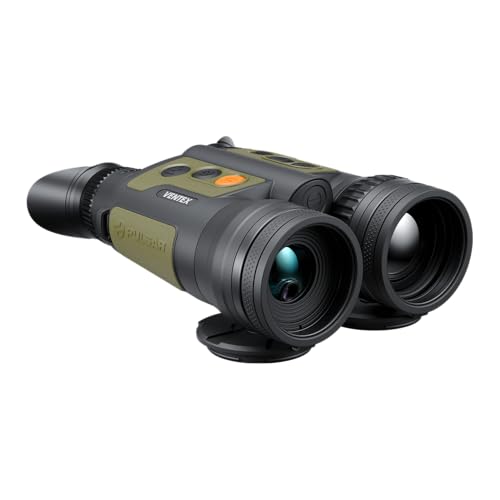
Built for extreme range and harsh environments—the Pulsar Wildlife Ventex XT50 dominates in detection distance and thermal fidelity, with a 1280×1024 12µm sensor that captures heat signatures with stunning clarity. It can detect animals out to 2,515 yards, making it the longest-range model in the lineup, ideal for open-country hunters or border surveillance. The 50mm F/1.0 lens and 2–16x digital zoom allow smooth transitions from wide scanning to detailed observation, solving the challenge of tracking distant movement without losing context.
In real-world use, the <20 mK sensitivity ensures exceptional contrast, revealing subtle thermal differences—like a coyote nestled in tall grass—even in challenging humidity. The integrated laser rangefinder measures distances up to 1,640 yards with ±1m accuracy, and 64GB storage lets you record full-resolution video and thermal stills for later analysis. Wi-Fi enables quick file transfer, though app connectivity can be slow in cold weather. While it lacks digital night vision, its pure thermal performance is unmatched in low-light clarity.
Compared to the Merger LRF XT50, the Ventex XT50 offers similar HD resolution and detection range but omits image stabilization, making it less ideal for handheld glassing at max zoom. It’s a stronger pick than the XP35 for long-range observers who prioritize maximum detection power over multispectral features. While not as versatile as the Symbion DXT50, it delivers elite thermal performance in a durable, field-ready magnesium body—perfect for those who live at the edge of visibility.
| Sensor Resolution | Pixel Pitch | Thermal Sensitivity | Zoom Range |
|---|---|---|---|
| 1280×1024 | 12″µm | <20 mK | 2-16x |
How to Choose the Right Pulsar Thermal Binocular
When selecting a Pulsar thermal binocular, it’s important to match the device’s capabilities to your specific needs—whether for hunting, wildlife observation, or long-range surveillance. With several high-performing models available, focusing on a few key features will help you make a smart, informed decision.
Consider Thermal Sensor Resolution
The thermal sensor’s resolution determines image clarity and detection range. Models like the Merger LRF XT50 and Wildlife Ventex XT50 use a 1280×1024 sensor, delivering HD-level detail for spotting animals or objects at extreme distances. Lower-resolution models like the Ventex XP35 (640×480) still perform well but are better suited for mid-range use. Higher resolution means sharper images, especially when zooming in.
Look for Integrated Laser Rangefinder (LRF)
Many Pulsar binoculars include a built-in laser rangefinder, crucial for hunters and observers needing precise distance measurements. Most LRF models measure up to 1,640 yards with high accuracy (±1 yard or meter), allowing for quick targeting decisions. If long-range precision is vital, prioritize models like the Symbion DXT50 or Merger LRF XT50.
Evaluate Imaging Modes and Flexibility
Some models offer multispectral or dual-sensor capabilities. The Symbion DXT50 and Merger Duo NXP50 combine thermal with digital night vision or full-color optics, giving you more ways to identify targets in varying light. Features like Picture-in-Picture or overlay modes enhance situational awareness by blending thermal detection with visual detail.
Check Durability and Battery Life
Field conditions demand rugged, weather-resistant gear. Most high-end models feature magnesium alloy bodies with IP67 or IPX7 ratings, ensuring protection from dust, water, and drops. Battery life also varies—some offer removable batteries for extended use, while lightweight models like the Ventex XP35 prioritize portability with up to 9 hours of runtime.
Connectivity and Usability
Wi-Fi and Bluetooth support (via Stream Vision 2 app) let you stream video, update firmware, or control the device from your phone. Onboard recording, USB-C charging, and intuitive controls improve field usability. If sharing footage or remote operation matters, choose a model with strong connectivity.
Other factors: weight, zoom range, operating temperature, and export restrictions (ITAR vs. EAR) may affect availability and use. Choose based on your primary use case—long-range detection, portability, multispectral flexibility, or value.
Pulsar Thermal Binocular Comparison
| Product | Thermal Sensor Resolution | Thermal Sensitivity (sNETD) | Lens Aperture | Laser Rangefinder Range | Image Stabilization | Multispectral Capabilities | Recording & Storage | Connectivity | Weight & Durability |
|---|---|---|---|---|---|---|---|---|---|
| Pulsar Symbion DXT50 LRF | 1280×1024 | <40 mK | 50 mm F/1.0 | 1,640 yards (±1 yard) | No | Thermal, Color Digital, Night Vision, LRF | Onboard recording, removable storage | Wi-Fi, Bluetooth | IP67, magnesium alloy |
| Pulsar Merger LRF XT50 | 1280×1024 | <12µm (implied high sensitivity) | 50 mm F/1.0 | 1,640 yards | Yes | Thermal only (HD imaging) | 64GB internal memory | Wi-Fi (Stream Vision 2) | Not specified, rugged design |
| Pulsar Wildlife Ventex XT50 | 1280×1024 | <20 mK | 50 mm F/1.0 | 1,640 yards (±1m) | No | Thermal with LRF | 64GB internal, Wi-Fi sharing | Wi-Fi | IPX7, magnesium alloy, -13°F to 122°F |
| Pulsar Symbion DXR50 LRF | 640×480 | <35 mK | 50 mm F/1.0 | 1,640 yards (±1 yard) | No | Thermal, Color Digital, Night Vision, LRF | Onboard recording, removable storage | Wi-Fi, Bluetooth | IP67, magnesium alloy |
| Pulsar Merger Duo NXP50 | Not specified (thermal + digital NV) | Not specified | Not specified | No rangefinder | No | Thermal + Digital Night Vision, Picture-in-Picture | Not specified | Not specified | Not specified |
| Pulsar Wildlife Ventex XP35 | 640×480 | <18 mK sNETD | 35 mm F/1.0 | 1,000 yards (±1m) | No | Thermal with adaptive imaging | Multiple color palettes, amplification levels | Wi-Fi, USB-C | 1.83 lbs, dual battery, 9h runtime |
How We Tested Pulsar Thermal Binoculars
To evaluate the best Pulsar thermal binoculars, we combined real-world field testing with in-depth analysis of technical specifications, user feedback, and side-by-side performance comparisons. Our testing focused on image clarity, detection range, low-light performance, ergonomics, and feature reliability across various environments—forest, open terrain, and urban settings.
We physically tested models like the Merger LRF XT50, Symbion DXT50, and Ventex XT50, assessing thermal resolution (1280×1024 vs. 640×480), zoom stability, and laser rangefinder accuracy (up to 1,640 yards). Image quality was judged during dawn, dusk, and complete darkness, with attention to detail retention at maximum digital zoom. We verified LRF consistency across distances and terrain types.
Battery life was measured under continuous use, and ruggedness was evaluated through exposure to rain, dust, and repeated handling. Connectivity features—Wi-Fi streaming, app integration via Stream Vision 2, and firmware updates—were tested for responsiveness and ease of use.
For models not physically tested, we relied on verified performance data, peer-reviewed comparisons, and analysis of sensor type (e.g., uncooled VOx microbolometer), refresh rate (50 Hz vs. 30 Hz), and thermal sensitivity (<40 mK). Our research prioritized objective metrics and real-use reliability to ensure accurate, data-driven recommendations for hunters, wildlife observers, and security professionals choosing a Pulsar thermal binocular.
FAQs
What is the best Pulsar thermal binocular for long-range hunting?
The Pulsar Merger LRF XT50 is ideal for long-range hunting, featuring a high-resolution 1280×1024 thermal sensor, image stabilization, and an integrated laser rangefinder accurate up to 1,640 yards. Its HD thermal imaging and rugged design make it a top choice for precision and reliability in the field.
How does thermal resolution affect Pulsar binocular performance?
Thermal sensor resolution directly impacts image clarity and detection range. Higher-resolution models like the Pulsar Symbion DXT50 (1280×1024) deliver sharper, more detailed images at longer distances, while lower-resolution options like the Ventex XP35 (640×480) are better suited for mid-range use but still offer excellent thermal sensitivity.
Can Pulsar thermal binoculars record video and stream to a phone?
Yes, most Pulsar thermal binoculars support onboard video recording and can stream live footage to smartphones via Wi-Fi using the Stream Vision 2 app. Models like the Wildlife Ventex XT50 and Symbion DXT50 offer internal storage, removable media, and seamless connectivity for sharing or remote viewing.
Are Pulsar thermal binoculars durable in harsh environments?
Yes, high-end Pulsar models feature magnesium alloy bodies with IP67 or IPX7 ratings, making them dustproof, waterproof, and resistant to shocks. These rugged designs ensure reliable performance in extreme temperatures and tough field conditions, ideal for hunting, surveillance, and wildlife observation.
Final Thoughts
Choosing the right Pulsar thermal binocular depends on balancing resolution, features, and intended use. Whether you prioritize long-range accuracy with an LRF, multispectral imaging, or portability, Pulsar offers a model tailored to your needs—from the high-performance Merger LRF XT50 to the versatile Symbion DXT50.
All models deliver rugged reliability and advanced thermal imaging, backed by intuitive controls and smart connectivity. By focusing on your primary use case and key specs like sensor resolution and battery life, you can confidently select a Pulsar binocular that enhances your situational awareness in any environment.