You’re standing on a rocky ridge at sunrise, scanning a distant canyon for movement. Or perhaps you’re at a stadium concert, straining to see the performer’s expression across a sea of fans. In moments like these, a monocular becomes your go-to tool—compact enough to fit in your pocket, yet powerful enough to bring faraway details into sharp focus. But when you see models labeled “8×25,” “10×42,” or “12×50,” what do those numbers actually mean? And how do you pick the right monocular magnification for your needs?
This monocular magnification guide cuts through the confusion. You’ll learn exactly how magnification works, how it interacts with lens size and optical quality, and which specs matter most for real-world use. Whether you’re birdwatching, hunting, hiking, or navigating at night, the right monocular makes all the difference. We’ll break down every key factor—from exit pupil to eye relief—so you can choose with confidence and clarity.
What Do 8×25 and 10×42 Mean on a Monocular?

Every monocular model name includes two numbers separated by an “x”—like 8×25 or 10×42. These aren’t random codes; they define the core performance of the device.
First Number: How Much Closer Does It Bring the View?
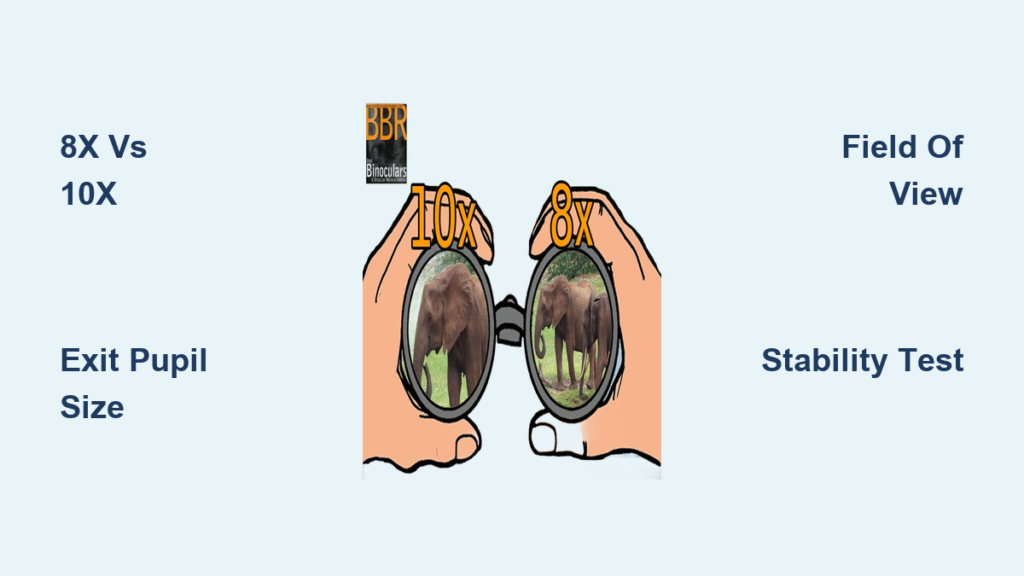
The number before the “x” is the magnification power. It tells you how many times closer the object appears than with your naked eye.
- An 8x monocular makes a target 800 feet away appear as if it’s only 100 feet away.
- A 10x brings that same object to just 80 feet visually.
- A 12x model makes it look like it’s only 67 feet away.
Higher magnification reveals finer details—like feather patterns on a bird or facial expressions at a concert. But there’s a catch: the higher the magnification, the more it amplifies hand shake. Without support, a 12x monocular can feel jumpy and hard to stabilize.
Second Number: How Bright Is the Image?
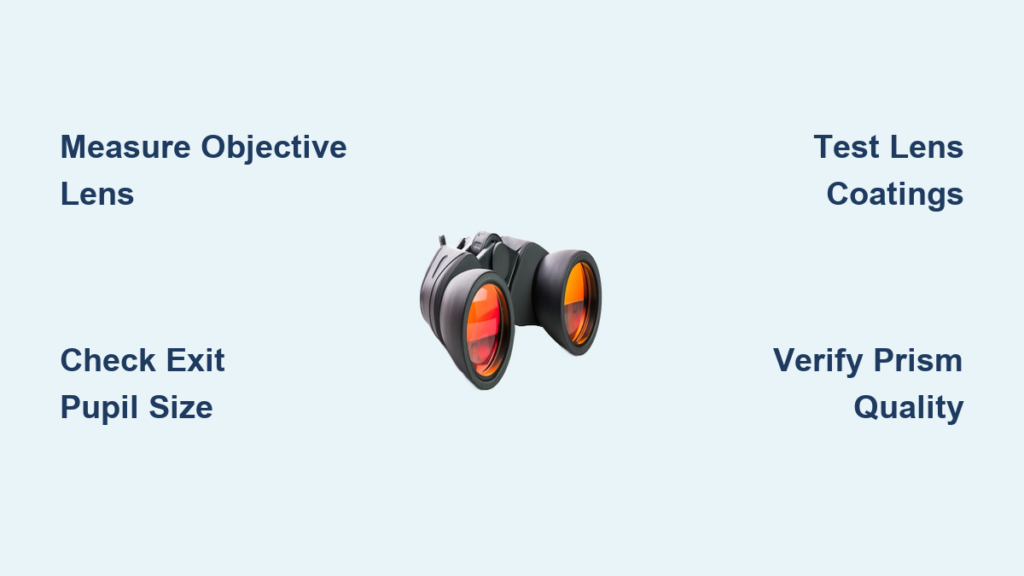
The number after the “x” is the objective lens diameter in millimeters—the size of the front lens that gathers light.
- 25mm: Compact and lightweight, but limited light capture—best in daylight.
- 42mm: Balances brightness and portability—excellent for dawn, dusk, or shaded forests.
- 50mm: Maximizes light intake—ideal for low-light conditions like marine or night use.
A 10×42 gives strong zoom and bright images, making it a favorite for hunters. A 6×18 sacrifices power and brightness for ultra-portability—perfect for slipping into a pocket.
Real-World Matching: Use Case to Specs
| Activity | Best Model | Why It Works |
|---|---|---|
| Hiking | 8×25 | Lightweight, fits in pocket, wide field of view |
| Birdwatching | 8×42 or 10×42 | Bright image, good detail, stable at 8x |
| Marine | 7×50 | Large exit pupil (7.1mm), stable on rocking boats |
| Tactical | 10×42 to 12×50 | Long-range clarity, often tripod-ready |
| Night Vision | 3×14.5 | Low power preserves brightness, uses IR illumination |
Your ideal monocular balances magnification, brightness, and portability—not just raw power.
Best Magnification Ranges for Different Activities
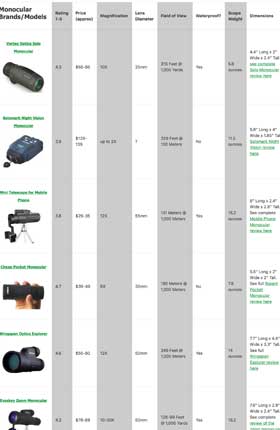
Not all magnifications are equal. The right choice depends on stability, lighting, and what you’re trying to see.
5x–8x: Stable, Wide-Angle, and Easy to Use
- Ideal for: Hiking, travel, concerts, general viewing
- Field of View: Wider—easier to scan trees or crowds
- Image Stability: Very steady, even with shaky hands
- Top Picks: 8×25, 8×30
An 8×25 is the sweet spot for everyday carry. It’s small enough to pocket, bright enough for daylight use, and stable enough to track moving animals or read distant signs.
✅ Pro Tip: For fast-moving birds, 8x is better than 10x—wider field of view means less chance of losing your target.
9x–10x: Sharper Detail, Needs Steady Hands
- Best for: Hunting, serious birding, long-distance spotting
- Detail Level: See antlers, wing bars, facial features
- Challenge: Amplifies hand shake—best used with both hands or braced
- Solution: Rest on a tree, rock, or use a monopod
A 10×42 is a top choice for hunters who need to identify game at long range. But after a long climb, your hands may tremble—making a tripod or stabilizing surface essential.
⚠️ Warning: If you can’t hold it still, higher magnification reduces clarity instead of improving it.
12x–15x: High Power, Requires Support
- Best for: Surveillance, scouting, tripod-based observation
- Detail: Extreme—read license plates from 500 feet
- Drawbacks: Narrow field of view, very sensitive to movement
- Must-Have: Monopod or tripod
A 12×50 delivers impressive reach, but handheld use is often frustrating. It’s like trying to hold a laser pointer steady on a distant target—any movement is magnified.
✅ Pro Tip: Pair a 12x monocular with a mini tripod. The extra 6 oz of gear transforms usability for backpackers and scouts.
Objective Lens Size: Why Bigger Lenses Mean Brighter Images
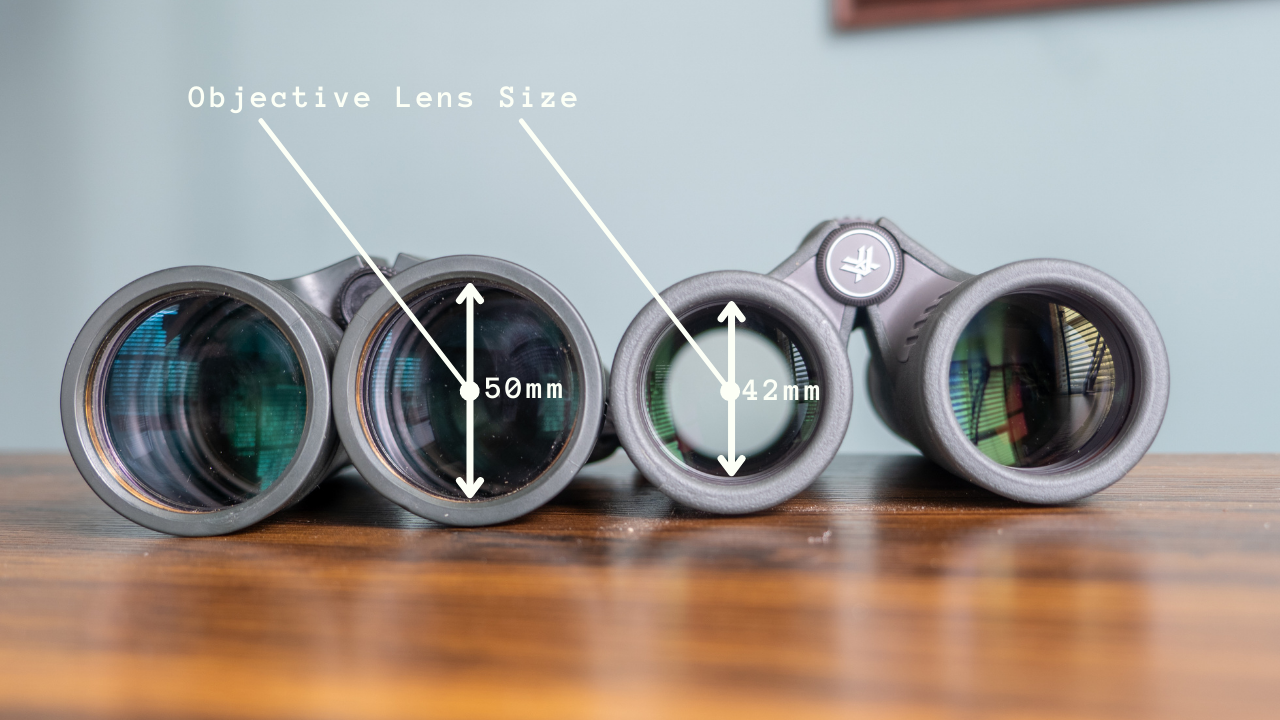
The front lens size doesn’t just affect size—it determines how much light reaches your eye.
Exit Pupil: The Secret to Low-Light Performance
Exit pupil = Objective lens ÷ Magnification
This number (in mm) tells you how much light exits the eyepiece and enters your eye.
- 8×25 → 3.1mm: Okay in daylight, dim at dusk
- 8×42 → 5.25mm: Bright image in low light
- 7×50 → 7.1mm: Matches your eye’s pupil at night—perfect for darkness
A larger exit pupil means brighter images—critical for marine use, dawn/dusk hunting, or night observation.
Why 7×50 Dominates Marine Use
The 7×50 combo has been standard on ships for decades. The 7x magnification keeps the image stable on a moving deck, while the 50mm lens delivers a massive 7.1mm exit pupil—perfect when your eyes are fully dilated in darkness.
Lens Size Categories
| Type | Diameter | Best For |
|---|---|---|
| Compact | 18–25mm | Day use, pocket carry |
| Mid-Size | 30–35mm | Balanced brightness and portability |
| Full-Size | 40–60mm | Low-light, long-range, tripod use |
Choose based on when and where you’ll use it most—don’t sacrifice brightness if you need it.
Optical Quality: Coatings, Glass, and Prisms That Make the Difference
Even the best magnification fails with poor optics. These three elements determine real-world performance.
Lens Coatings: The #1 Upgrade for Clarity
Uncoated lenses lose up to 50% of light to internal reflections. Coatings prevent that.
| Coating | Light Transmission | Image Quality |
|---|---|---|
| Coated | ~80% | Basic, some glare |
| Fully Coated | ~85% | Acceptable |
| Multi-Coated | ~90% | Good |
| Fully Multi-Coated (FMC) | 95%+ | Best—bright, crisp, natural colors |
✅ Always choose FMC if possible—it’s the single biggest upgrade for image quality.
Glass and Prisms: Sharpness and Depth
- ED (Extra-Low Dispersion) Glass: Eliminates color fringing, delivers sharper images—worth it for serious users.
- BAK-4 Prisms: Provide better edge-to-edge clarity than BK-7.
- Roof vs. Porro Prisms:
- Roof: Slim, rugged, weatherproof—common in premium compact models.
- Porro: Brighter image, more depth, often better value.
Many mid-range monoculars use Porro prisms to deliver excellent optics at lower prices.
Specialized Monoculars: Night Vision, Thermal, and Smart Features
Standard optics have limits. Advanced models go further.
Night Vision Monoculars (3x–6x)
- Amplifies low light or uses infrared (IR) illuminator
- Works in near-total darkness
- Example: Barska NVX100 3×14.5—records video, has real-time screen
Thermal Imaging Monoculars
- Detects heat, not light—sees through fog, smoke, foliage
- No ambient light needed
- Example: ATN OTS-HD 384—Wi-Fi, rangefinder, stabilization
Rangefinder Monoculars
- Built-in laser measures distance—critical for hunters
- Often includes ballistic calculator
Smart Monoculars
- Take photos/videos, connect to smartphones
- Example: Gosky 12×55—comes with phone adapter
Key Performance Factors: Field of View, Eye Relief, Close Focus
Beyond magnification, three specs affect usability.
Field of View (FOV)
- Measured in feet at 1000 yards (e.g., 350 ft @ 1000 yds)
- Higher magnification = narrower FOV
- Wider FOV = easier to find and track fast targets
An 8×25 may offer 400 ft FOV—great for scanning. A 12×50 might drop to 275 ft—harder to follow birds.
Eye Relief (≥14mm for Glasses Wearers)
- Distance from eyepiece to eye for full view
- Less than 12mm causes “tunnel vision” if you wear glasses
- Example: Orion 10×42 offers 17mm—ideal for eyeglass users
Close Focus (≤1.5m for Versatility)
- Minimum focus distance
- Useful for reading, insects, or inspecting gear
- Models with 0.5m–1.5m are ideal for nature study
Size, Weight, and Portability: Will You Actually Carry It?
A monocular is only useful if you bring it.
- < 8 oz: Best for hiking, daily carry
- 8–12 oz: Better optics, slight weight penalty
- > 12 oz: High performance, but consider tripod use
Pocket-sized models like the Carson CloseUp CF-718 (6×18) weigh just 2.8 oz. Full-size models like the Wingspan Explorer 12×50 deliver power but need a case.
Always test grip and balance—comfort matters on long trips.
Use Case Recommendations: Pick the Right Model
| Activity | Best Model | Key Features |
|---|---|---|
| Birdwatching | 8×42 or 10×42 | FMC, ED glass, waterproof |
| Hunting | 10×42 or 12×50 | Rugged, fog-proof, long eye relief |
| Marine | 7×50 | Large exit pupil, compass, waterproof |
| Hiking | 8×25 | Pocketable, lightweight |
| Night Use | 3×14.5 NV | IR illuminator, battery-powered |
| Tactical | 10×42+ | Rangefinder, Wi-Fi, tripod-ready |
Final Checklist: Choose With Confidence
Before buying, verify:
✅ Magnification: 5x–8x for handheld, 9x+ with support
✅ Lens Size: 25mm (compact), 42mm+ (bright)
✅ Coatings: Fully Multi-Coated (FMC)
✅ Prism: Roof (compact) or Porro (brighter)
✅ Eye Relief: ≥14mm if wearing glasses
✅ Close Focus: ≤1.5m for versatility
✅ Durability: Waterproof, fog-proof, rubber armor
✅ Weight: Under 12 oz for carry comfort
✅ Special Features: Night vision, thermal, rangefinder (if needed)
✅ Warranty: 1+ year, preferably lifetime
The best monocular isn’t the most powerful—it’s the one you’ll actually use. Match it to your lifestyle, and you’ll never leave home without it.