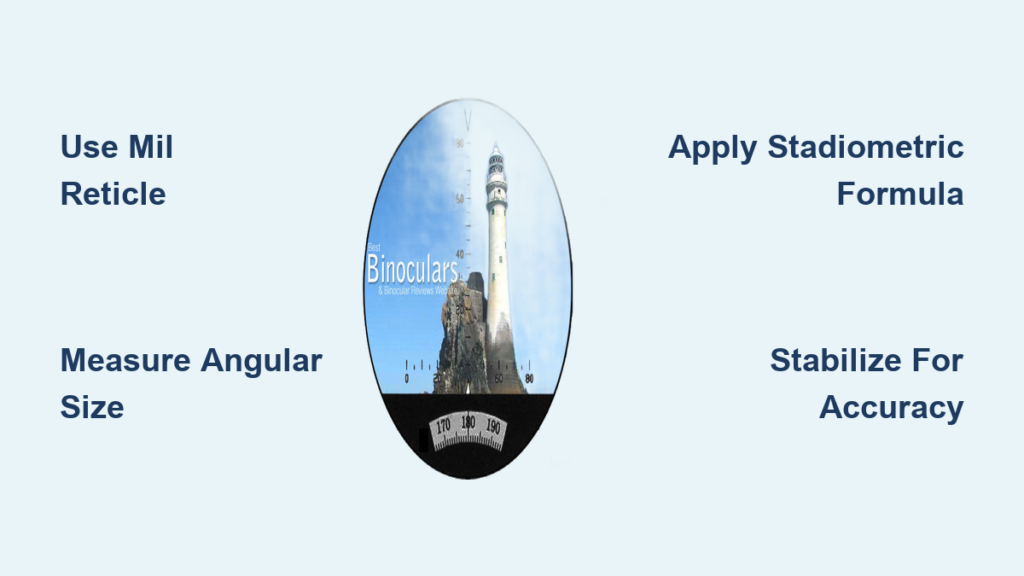
You’re scanning the horizon with your binoculars when you spot movement in the distance. Is that deer within your effective shooting range? How far away is that landmark you’re trying to reach? Without a laser rangefinder, most people would be guessing—but you don’t have to. Learning how to calculate binocular range transforms your standard optics into a precision distance-measuring tool, using nothing but basic geometry and a few key reference points. This skill separates casual observers from true outdoor professionals, giving hunters ethical shooting decisions, birders accurate location logging, and hikers reliable navigation capabilities.
Mastering binocular range calculation relies on stadiometric principles that military personnel and surveyors have used for decades. The good news? You don’t need special equipment—just binoculars with a reticle and knowledge of common object sizes. In this guide, you’ll discover exactly how to calculate binocular range using proven techniques that work in real-world conditions, without relying on electronics that can fail when you need them most. Whether you’re stalking game, navigating wilderness terrain, or simply satisfying your curiosity about distant objects, these methods will give you reliable distance estimates within minutes of applying what you learn here.
Why Your Binoculars Can Measure Distance Without Electronics
Binoculars with reticles transform from simple viewing tools into precision measuring devices through geometry. The magic happens because light travels in straight lines, creating predictable angular relationships between object size, distance, and apparent size through your optics. When you understand how to read these angular measurements against known object dimensions, you bypass the need for battery-dependent rangefinders entirely.
The milliradian (mil) system makes this possible by providing a consistent angular measurement that scales with distance. At 1,000 meters, 1 mil equals exactly 1 meter of linear measurement—this simple relationship is what allows you to calculate binocular range using nothing but visual references. Your binoculars’ reticle divisions serve as your measuring tape, with each mark representing a specific angular measurement that corresponds to physical dimensions at various distances.
The Stadiometric Formula: Your Key to Accurate Distance Calculation

Distance (meters) = (Target Size in meters ÷ Angular Size in mils) × 1,000—this is the equation that makes binocular range calculation possible. Forget complex trigonometry; this straightforward formula works because milliradians provide a direct linear relationship to distance. The critical insight? The same physical object appears as different angular sizes depending on its distance from you.
Consider a standard adult human (approximately 1.7 meters tall):
– At 100 meters, they’ll appear about 17 mils tall
– At 500 meters, they’ll measure roughly 3.4 mils
– At 1,000 meters, they’ll shrink to just 1.7 mils
How to Apply the Formula in Three Seconds
- Identify a known dimension of your target (human height, vehicle width, door height)
- Measure the angular size using your binocular’s reticle (count mils)
- Multiply by 1,000 after dividing known size by mil measurement
Pro Tip: Create a mental cheat sheet for common objects:
– White-tailed deer chest height: 0.9 meters → at 3 mils = 300 meters
– Standard car width: 1.8 meters → at 2 mils = 900 meters
– Average person height: 1.7 meters → at 5 mils = 340 meters
Essential Binocular Features Needed for Reliable Range Estimation
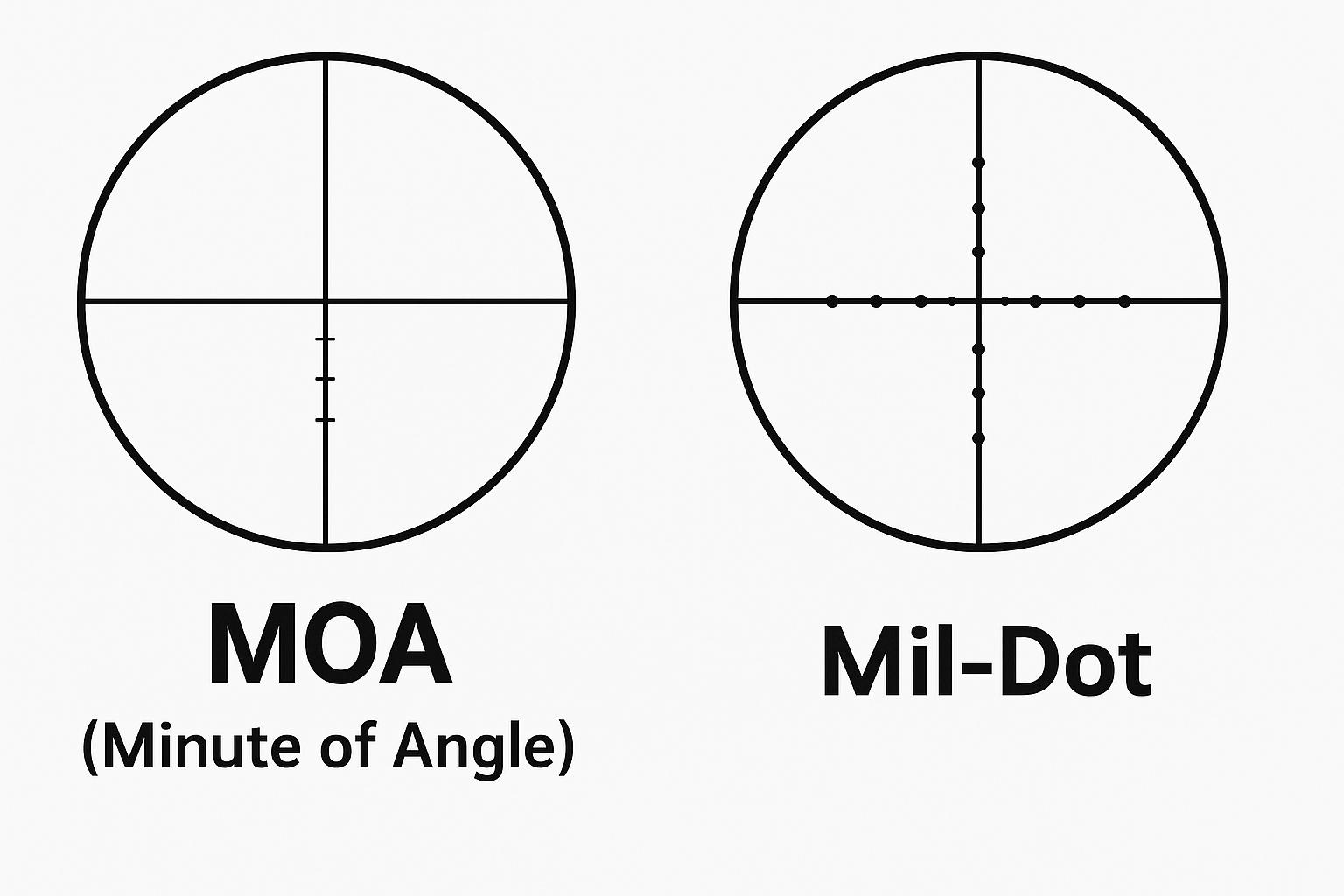
Not all binoculars work equally well for rangefinding. Your optics must have specific features to calculate binocular range accurately. The absolute minimum requirement is a mil-based reticle—typically appearing as dots, hash marks, or lines spaced at regular angular intervals across the field of view.
Critical Reticle Specifications
- Clear mil divisions (0.5, 1, or 2 mil increments between marks)
- Horizontal and vertical scales for measuring height or width
- High-contrast markings visible in low-light conditions
- Center crosshair reference point for alignment
Warning: Many “rangefinding” binoculars use non-standard reticles. Before relying on them in the field, verify your specific model’s mil spacing by measuring known distances. Consult your manual or test against objects at verified ranges—using incorrect mil values guarantees inaccurate calculations.
Target Size Reference Guide: From Humans to Vehicles
Accurate binocular range calculation fails when you guess target sizes incorrectly. Use these verified dimensions as your field reference:
Standard Reference Measurements
- Adult human height: 1.7-1.9 meters (use 1.8m for conservative estimates)
- White-tailed deer:
- Chest height: 0.8-1.0 meters (0.9m average)
- Body length: 1.5-1.7 meters (1.6m average)
- Common vehicles:
- Passenger car width: 1.7-2.0 meters (1.8m average)
- Standard doorway height: 2.0-2.1 meters
- Utility pole diameter: 0.3-0.4 meters
Expert Note: When estimating wildlife distances, always use minimum size estimates. A “small buck” might be 20% smaller than average—using the smaller dimension ensures you don’t overestimate distance and shoot beyond ethical range.
Step-by-Step: Measuring Distance to a Target in 3 Simple Actions
Align and Stabilize Your View
Mount your binoculars on a tripod or rest them against a solid object—the slightest movement ruins mil measurements. Center your target between vertical reticle lines, aligning one edge with a reference mark. For height measurements, use the horizontal lines; for width, use vertical divisions.
Precisely Measure Angular Size
Count how many mil divisions your target spans. For fractional measurements (common with smaller objects), estimate between marks—this is where practice pays off. Critical technique: Measure at the target’s widest or tallest consistent dimension (deer chest height rather than antler spread).
Calculate and Verify Your Result
Plug your numbers into the formula: (Known Size ÷ Mil Measurement) × 1,000. Then cross-verify using a different dimension if possible—measure both height and width of a vehicle, for example. If calculations differ significantly, remeasure; the error is likely in your mil reading.
How to Fix 4 Common Binocular Ranging Errors

Misreading Reticle Spacing
Many users assume all mil-dots equal 1 mil when some binoculars use 0.5 or 2 mil spacing. Solution: Check your manual or test at known distances—measure a 2-meter object at 1,000 meters (should appear as 2 mils).
Atmospheric Distortion Errors
Heat shimmer and haze compress apparent target size, making objects seem farther away than they are. Solution: In poor conditions, increase your calculated distance by 10-15% as a safety margin.
Incorrect Target Size Assumptions
Using average human height for a child or small adult creates massive errors. Solution: When possible, reference multiple objects—measure a person next to a known-height fence post.
Unstable Viewing Platform
Handheld measurements often vary by 20-30% due to movement. Solution: Always use a rest for critical measurements—you’ll gain accuracy equivalent to doubling your binocular magnification.
Real-World Applications for Hunters, Golfers, and Outdoor Enthusiasts
Hunting Scenarios
Calculate binocular range to determine if game is within your ethical shooting distance. For deer hunters using a 300-yard maximum range, knowing a buck is at 280 yards (not 320) means the difference between a clean kill and a wounded animal. Measure chest height at the moment of stillness—this single skill prevents countless unethical shots.
Golf Course Navigation
Standard flagsticks measure 7 feet tall—use this known dimension to calculate distances to hazards or the green. At 5 mils angular size, your distance equals (2.1m ÷ 5) × 1,000 = 420 meters—critical information when deciding between club selections.
Wilderness Navigation
When map reading, measure distances between known landmarks to pinpoint your location. A standard-width trail (1.5m) spanning 3 mils indicates you’re 500 meters from that visible path junction—transforming your binoculars into a navigation tool.
Training Drills to Improve Your Binocular Range Calculation Accuracy
Start your practice regimen with these field-tested exercises that build reliable skills:
Stationary Target Progression
Place objects of known size (2m pole, 1.8m wide board) at measured distances (100m, 200m, 300m). Practice measuring until your estimates consistently fall within 10% of actual distances. Time investment: Just 15 minutes daily for one week dramatically improves accuracy.
Real-World Object Calibration
At your local park or neighborhood, measure common objects:
– Lamppost heights (typically 5-7m)
– Car widths (measure 10 different vehicles)
– Standard windows (1.2m x 1.5m)
Record your estimates versus actual measurements in a field notebook—this builds your personal reference database for future ranging.
Why Tripod Stability Makes or Breaks Your Distance Measurements
Handholding binoculars introduces 20-30% error in mil measurements due to natural body movement. At 500 meters, this translates to 100-meter distance errors—enough to turn a clean shot into a miss. Solution: Use any stable surface—a fence post, backpack, or even your knee—to steady your optics. Military snipers achieve sub-1% accuracy with proper bracing techniques that anyone can learn.
Proven stabilization methods:
– Lean against solid objects with elbows braced
– Rest binoculars on vehicle hood or window frame
– Use a monopod clipped to binocular strap
– Practice controlled breathing during measurement
The difference between a shaky handheld measurement and a stabilized reading is the difference between guessing and knowing—a single practice session with proper support will prove this dramatically.
Final Note: Mastering how to calculate binocular range transforms your standard optics into a precision field tool that works when electronics fail. With consistent practice using known reference objects and proper stabilization techniques, you’ll develop the ability to estimate distances within 5-10% accuracy—enough for ethical hunting decisions, precise navigation, and confident outdoor decision-making. Start implementing these techniques today, and within weeks, you’ll wonder how you ever navigated the outdoors without this essential skill.