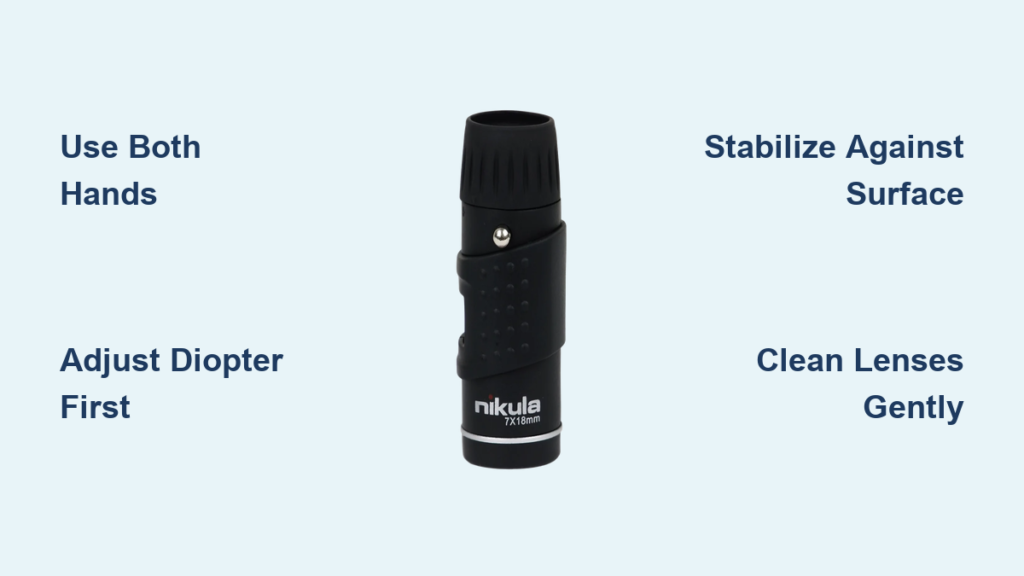
If you’ve just unboxed your NIKULA 30X25 high-powered pocket monocular, you’re holding a compact yet powerful optical tool designed to bring distant scenery into sharp focus—whether you’re birdwatching from a hillside, scanning the horizon on a hike, or enjoying a concert from the back row. But to truly benefit from its 30x magnification, you need more than just point-and-look. Knowing how to use Nikula monocular correctly is key to avoiding frustration and unlocking crisp, stable images every time. In this guide, you’ll learn everything from initial setup and proper focusing techniques to stability tricks, maintenance, and troubleshooting—so you can make the most of this portable powerhouse in real-world conditions.
Unbox and Prepare Your Monocular
Before you start scanning the skies, take a few moments to prepare your device properly. A well-prepared monocular performs better and lasts longer.
Remove Protective Packaging Safely
Begin by carefully removing the monocular from its padded case. Check that both the eyepiece cap (on the side you look through) and the objective lens cap (on the front) are included. These small covers are essential—they shield the lenses from scratches, dust, and moisture when not in use. Always reattach them after each session.
Set Focus Wheel to Neutral
Locate the focus wheel on the side of the body. Before first use, slide it to the center position. This ensures the internal focusing mechanism starts from a balanced point, reducing strain and helping you achieve clear focus faster when viewing distant objects.
Inspect for Damage or Smudges
Examine both lenses under good lighting. Look for fingerprints, smudges, or scratches. If present, clean gently with a dry microfiber cloth—never use paper towels, tissues, or your shirt sleeve, as these can scratch the delicate anti-reflective coatings. For stubborn dust, blow it off first or use a soft brush to avoid grinding particles into the glass.
Hold and Stabilize for Clear Viewing

At 30x magnification, even the slightest hand movement becomes visible—like shaking a camera at full zoom. Learning how to hold the monocular steadily is critical for clear viewing.
Use Two Hands for Stability
Hold the monocular with both hands, placing your thumbs near the focus wheel for quick adjustments. Tuck your elbows into your sides and keep your upper body still. This bracing technique minimizes shake and dramatically improves image clarity, especially during prolonged observation.
Brace Against a Solid Surface
For extended viewing—like tracking birds or watching wildlife—lean against a tree, wall, or rest your arms on a railing or table. Even light contact with a stable surface reduces hand tremors and makes it easier to follow moving subjects.
Consider a Tripod Adapter
While the NIKULA 30X25 is designed for portability, it can be mounted on a tripod using an optional tripod adapter (sold separately). This is ideal for surveillance, long-distance observation, or situations where hands-free use is needed. Mounting eliminates all hand shake, giving you rock-steady, fatigue-free viewing.
Focus for Sharp, Crisp Images
Proper focusing transforms a blurry scene into a detailed view. Follow these steps to get the sharpest image possible every time.
Find Your Dominant Eye
Close one eye and look at a distant object, then switch eyes. The eye that gives a clearer, more natural view is your dominant eye. Adjust the monocular to align with this eye for optimal clarity and comfort—especially important during extended use.
Adjust the Diopter Ring First
On the eyepiece, locate the diopter ring, usually marked with +/- settings. Turn it to the center (zero) position before starting. Then, focus on a distant object using the main focus wheel. Once the image is roughly sharp, fine-tune it using the diopter ring until the view is perfectly clear. Once set, leave the diopter alone—only use the main focus wheel for future adjustments.
Fine-Tune with the Focus Wheel
Slowly rotate the focus wheel in small increments. At 30x power, even a slight turn makes a big difference. Move it carefully until the image “snaps” into focus. Avoid forcing or over-turning the wheel, as this can damage the internal mechanism over time.
Maximize Daylight Performance

The NIKULA 30X25 excels in bright light—but has limitations in low-light conditions. Understanding its strengths helps you use it effectively.
Best Used in Daylight
With a 25mm objective lens, the monocular gathers less light than larger models. For best results, use it during daylight hours. Images will be brighter, clearer, and more detailed. Avoid using it at dusk, dawn, or indoors under dim lighting, where the view may appear dark or grainy.
Avoid Shaky Conditions
Wind, motion, or unsteady hands amplify image shake at high magnification. Choose calm weather and stable positions when possible. If tracking fast-moving subjects like birds or vehicles, lower the effective magnification slightly by stepping back or using shorter viewing bursts.
Don’t Overuse Maximum Zoom
While 30x sounds impressive, full magnification narrows the field of view and increases image shake. For most practical uses—like hiking or travel—15x to 25x offers a better balance of detail, stability, and ease of use. Reserve full zoom for stationary targets when you’re braced or using a tripod.
Clean and Maintain Your Monocular
Proper care keeps your optics performing like new and prevents long-term damage.
Clean Lenses Safely
Use only a dry microfiber cloth to wipe lenses. If dust is present, blow it off or use a soft lens brush first. If smudges remain, apply a drop of lens cleaning solution to the cloth—never directly onto the lens. Wipe gently in a circular motion from center to edge.
Replace Lens Caps Immediately
Always reinstall both caps after use. They’re your first line of defense against scratches, dirt, and moisture. Never store or carry the monocular without them.
Store in a Dry, Cool Place
Keep the monocular in its protective case, away from direct sunlight, heat sources, or humid areas like bathrooms. Prolonged exposure can warp plastic components or cause internal fogging.
Check for Internal Moisture
Periodically inspect the inside of the lenses. If you see fog or condensation, stop using the device. Place it in a sealed container with silica gel packets for 24–48 hours to absorb moisture. Do not expose it to heat or sunlight to dry it—this can damage seals or lenses.
Troubleshoot Common Viewing Issues

Encountering problems? These quick fixes solve the most frequent user issues.
Blurry Image? Recheck Focus Settings
If the view is fuzzy:
– Slowly adjust the focus wheel.
– Ensure the diopter ring is set for your dominant eye.
– Clean both lenses—smudges often mimic focusing problems.
Image Shaking Too Much?
At 30x, hand shake is normal. To stabilize:
– Use both hands and brace your elbows.
– Lean against a wall or rest your arms.
– Consider a tripod mount for steady, long-term viewing.
Lenses Fogging Up?
Fogging occurs due to sudden temperature changes (e.g., moving from cold outdoors to warm indoors). To prevent:
– Let the monocular acclimate slowly.
– Keep lens caps on during transitions.
– Store with silica gel packs in the case.
No Image or Dark View?
Common causes include:
– Lens caps still on—a surprisingly frequent mistake.
– Obstructions blocking the lens path.
– Heavy smudging on the objective lens—clean thoroughly.
Follow Safety Guidelines
Protect your eyes and your investment with these essential safety practices.
Never Point at the Sun
Never look directly at the sun through the monocular. The lens concentrates sunlight like a magnifying glass, which can cause instant and permanent eye damage—even with a brief glance. Teach others this rule if sharing the device.
Keep Away from Children
The monocular contains small parts and delicate optics. It’s not a toy. Keep it out of reach of young children and pets to prevent accidental drops, lens damage, or eye injury.
Avoid Extreme Temperatures
Do not leave the monocular in hot cars, freezing conditions, or damp environments. Extreme heat can warp plastic, while cold can cause internal fogging. Sudden temperature swings risk lens delamination or seal failure.
Extend Your Monocular’s Lifespan
With proper care, your NIKULA 30X25 can deliver years of reliable performance.
Use a Neck Strap for Portability
If your model supports it, attach a lanyard or neck strap. The compact size makes it easy to drop or misplace—especially outdoors. A strap keeps it secure and ready to use.
Carry in Protective Case
Always transport the monocular in its padded case. This prevents scratches, impacts, and exposure to dust and moisture—critical for maintaining optical clarity.
Schedule Regular Maintenance Checks
Every few months:
– Inspect lenses for wear or coating damage.
– Test the smoothness of the focus wheel.
– Clean the exterior and wipe down the storage case.
Know When to Upgrade
Over time, optics can degrade. If focus becomes inconsistent, internal fogging persists, or image quality drops significantly despite cleaning, consider replacement or professional servicing.
Mastering how to use Nikula monocular turns a simple pocket tool into a powerful extension of your vision. From proper focusing and stability techniques to cleaning and safe storage, each step ensures you get sharp, reliable views every time. Use it in daylight, stabilize your hands, protect the lenses, and never point it at the sun—your eyes and equipment will thank you. With care and practice, your NIKULA 30X25 will be your go-to companion for every outdoor adventure.