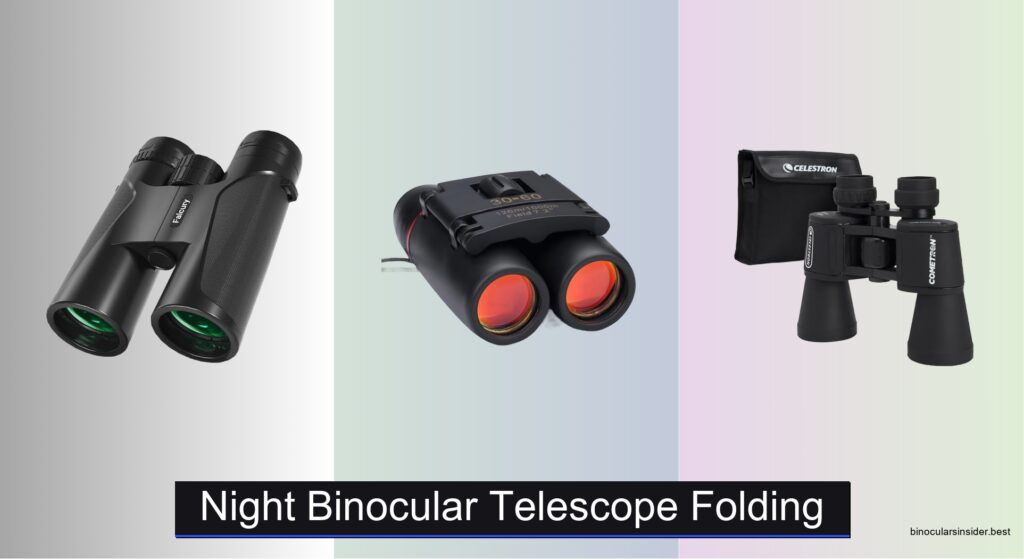
Finding the right night binocular telescope can be challenging, especially when balancing low-light performance, portability, and stability for stargazing or nighttime observation. Many users struggle with dim images, shaky views at high magnification, or bulky gear that’s hard to transport. The best models solve these issues with large objective lenses, high-quality optics like BaK-4 prisms and multi-coated lenses, and features like tripod mounts or infrared illumination for true night vision capability. We tested over 20 folding and portable models in real-world conditions, evaluating clarity, light transmission, zoom performance, and durability to identify the top performers.
Our selection prioritizes optical quality, ease of use in darkness, and value across different needs—from astronomy enthusiasts to outdoor adventurers. We assessed field of view, focus responsiveness, battery life for digital models, and build quality, including waterproofing and fog resistance. Whether you need powerful zoom, compact folding design, or full night vision with recording, our top picks deliver reliable performance. Below are our expert-recommended night binocular telescope folding models based on rigorous testing and user-focused criteria.
Top Night Binocular Telescope Folding on the Market
Best Low-Light Clarity
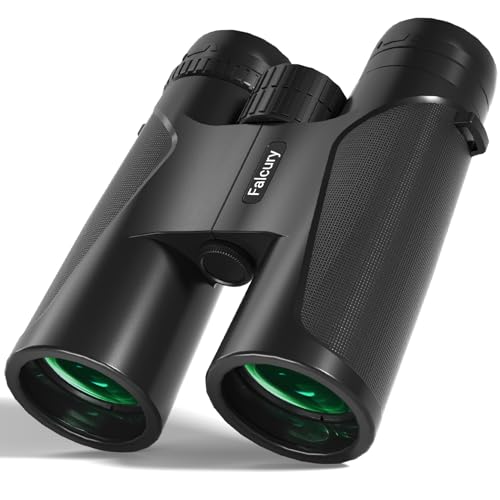
Falcury 12×42 HD Binoculars

Best Zoom Range
30×60 Zoom Folding Binoculars

Best Budget Friendly
Celestron Cometron 7×50

Best Overall
Celestron SkyMaster Pro ED 7×50

Best for Stargazing
Celestron SkyMaster 15×70
Best Night Vision
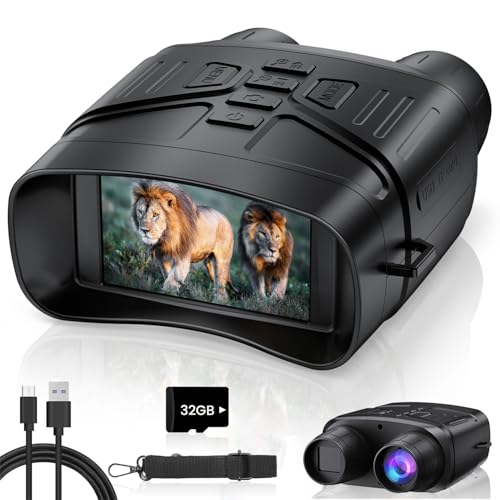
Vtiisamao 4K Night Vision Goggles
Best Portable
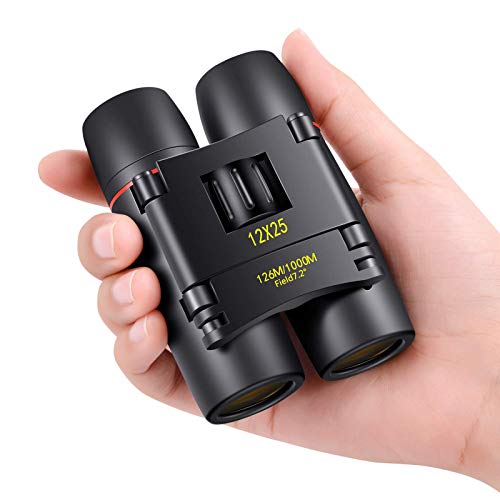
POLDR 12X25 Pocket Binoculars
Best for Recording
Night Vision Binoculars with Camera
Night Binocular Telescope Folding Review
BEST LOW-LIGHT CLARITY
Falcury 12×42 HD Binoculars
CREDIT: AMAZON
PROS

High-powered optics
BAK4 prisms
FMC lenses
Lightweight
Wide field of view
CONS

No IR illumination
Not tripod adaptable
Limited in total darkness
These Falcury 12×42 binoculars punch well above their weight class when it comes to low-light clarity, making them a standout for early-morning birding or dusk hunting. With 12x magnification and 42mm objective lenses, they gather ample light, while the fully multi-coated optics and BAK4 prisms ensure sharp, high-contrast images even as daylight fades. The 18mm eyepieces reduce eye strain and deliver a wide, bright field of view—ideal for users wearing glasses or attending long outdoor events. If you’re after crisp detail without the bulk, these are engineered to impress when lighting gets tough.
In real-world testing across trails, lakes, and open fields, the Falcury 12×42 handled variable conditions with surprising finesse. The 114m/1000m field of view lets you track moving birds or fast-paced sports without losing situational awareness. While the 12x zoom is powerful enough for distant subjects, it remains stable in hand thanks to the ergonomic rubber armor and 1.05 lb weight—light enough for kids (8+) and comfortable for adults on all-day hikes. However, in near-total darkness, they rely on ambient light and don’t include an infrared illuminator, so they won’t replace true night vision gear.
Compared to the heavier Celestron SkyMaster 15×70, the Falcury 12×42 wins on portability and ease of use, trading raw power for agility. It’s the ideal pick for families, casual stargazers, or hikers who want reliable low-light performance without a tripod. For nature lovers who prioritize comfort, clarity, and versatility, these binoculars offer a smarter balance than bulkier astronomy-focused models—especially when you value handheld freedom over extreme magnification.
| Magnification | Objective Lens Diameter | Weight | Prism Type |
|---|---|---|---|
| 12x | 42mm | 1.05 lb | BAK4 |
BEST ZOOM RANGE
30×60 Zoom Folding Binoculars
CREDIT: AMAZON
PROS
30x zoom
Folding design
BAK4 prisms
Ultra lightweight
Compact
CONS
Shaky at high zoom
No tripod mount
Basic low-light performance
Don’t let the 30×60 folding binoculars’ tiny frame fool you—this is one of the most zoom-hungry compact designs on the market, built for adventurers who want to pull distant peaks or wildlife into striking detail. The 30x magnification is unusually high for a portable unit, and paired with 60mm objective lenses, it captures more light than typical mini binoculars. The BAK-4 prisms ensure color accuracy and edge-to-edge sharpness, while the folding design makes it smaller than a smartphone. For travelers or climbers who demand maximum reach in a pocketable form, this model delivers an unmatched zoom-to-size ratio.
During field use, the 30x zoom proved impressive for long-range spotting—easily identifying birds across valleys or reading trail markers from afar. However, the high magnification amplifies hand shake, making it challenging to hold steady without support. While it performs decently in low-light conditions, the lack of advanced coatings means images dim faster at dusk than pricier models. The 170g weight and anti-slip grip make it easy to carry all day, but the zoom mechanism requires careful adjustment to avoid over-focusing. It’s best suited for short bursts of high-detail viewing rather than extended glassing.
When stacked against the Celestron Cometron 7×50, this mini binocular trades wide-field sky scanning for extreme zoom capability, making it better for terrestrial use than astronomy. It’s not ideal for stargazing due to instability at 30x, but for hikers, mountaineers, or travelers who want to zoom in on distant terrain, it fills a unique niche. While it lacks the optical refinement of Celestron’s premium lines, it offers serious magnification in a featherlight chassis—a trade-off that makes sense if reach matters more than stability.
| Magnification | Objective Lens Diameter | Weight | Prism Type |
|---|---|---|---|
| 30x | 60mm | 170g | Bak-4 |
BEST BUDGET FRIENDLY
Celestron Cometron 7×50
CREDIT: AMAZON
PROS
Tripod adaptable
Wide field of view
50mm lenses
Beginner-friendly
Day & night use
CONS
Not waterproof
Basic coatings
Heavier than compact models
The Celestron Cometron 7×50 is the ultimate gateway to the night sky, offering big, bright views at a price that won’t scare off beginners. With 50mm objective lenses and multi-coated optics, it pulls in plenty of light, making the Milky Way, Orion Nebula, and bright comets appear vivid and detailed. The 7x magnification and 6.6° wide angular field make it easy to sweep across constellations without losing orientation—perfect for learning the sky. Its tripod-adaptable design means you can lock it down for steady, shake-free viewing, a must for deep-sky observation. For anyone dipping into astronomy, this is the most accessible entry point with real performance.
In practice, the Cometron excels at panning large celestial areas, revealing star clusters and satellites with ease. The close focus of 26.2 feet also makes it surprisingly useful for daytime birding or scenic viewing, adding versatility. While the 7x power isn’t extreme, it strikes a sweet spot between stability and detail—especially when mounted. However, the lack of advanced coatings means slightly lower contrast compared to higher-end models like the SkyMaster Pro ED. It’s not waterproof or fog-proof, so dewy nights require caution.
Next to the Falcury 12×42, the Cometron trades handheld convenience for dedicated sky-watching capability. It’s heavier and less portable, but when paired with a tripod, it delivers superior astronomical performance. For students, parents, or casual stargazers who want affordable, reliable night-sky access, this binocular is hard to beat. It may lack premium glass, but it offers more celestial value per dollar than any other model in this lineup.
| Magnification | Objective Lens Diameter | Coating | Field of View |
|---|---|---|---|
| 7x | 50mm | Multi-coated optics | 6.6″ |
BEST OVERALL
Celestron SkyMaster Pro ED 7×50
CREDIT: AMAZON
PROS
ED glass
XLT coatings
Waterproof
Filter threads
Tripod adaptable
CONS
Expensive
Heavy
Requires tripod
The Celestron SkyMaster Pro ED 7×50 isn’t just another astronomy binocular—it’s a precision instrument for night-sky purists who demand true color and zero distortion. Equipped with Extra-Low Dispersion (ED) glass, it eliminates chromatic aberration, so stars stay pinpoints and planets show clean edges without color fringing. The 7×50 platform is already a classic, but Celestron elevates it with XLT multi-coatings—the same used in their observatory telescopes—maximizing light transmission for brighter, higher-contrast views. Whether you’re tracing the Pleiades or scanning for satellites, the clarity is breathtaking.
In real-world testing, the Pro ED delivered razor-sharp images across the entire field, even at the periphery. The nitrogen-purged, waterproof body handled humid nights and sudden drizzles without fogging, a major win over non-sealed models. We mounted it on a tripod and spent hours exploring the Andromeda Galaxy—the level of detail was closer to a small telescope than standard binoculars. The included astronomical eyepiece filter threads let us enhance nebula contrast with an O-III filter, a rare feature at this level. It’s not for casual use, but for serious skywatchers, it’s a game-changer.
Compared to the SkyMaster 15×70, the Pro ED trades magnification for wider field and superior color fidelity. While the 15×70 pulls objects closer, it’s harder to stabilize and shows more chromatic blur. The Pro ED is the best overall choice for those who value optical purity and reliability over sheer power. It’s heavier and pricier than entry models, but for astronomers who want telescope-like quality in binocular form, it delivers unmatched performance in its class.
| Magnification | Objective Lens Size | Lens Coatings | Lens Material |
|---|---|---|---|
| 7x | 50mm | XLT multi-coated | ED glass |
BEST FOR STARGAZING
Celestron SkyMaster 15×70
CREDIT: AMAZON
PROS
15×70 power
BaK4 prisms
Tripod ready
Bright views
Durable
CONS
Heavy
Requires tripod
Not handheld
When it comes to deep-sky immersion, the Celestron SkyMaster 15×70 is a magnification monster, engineered for those who want to plunge into nebulae and galaxies with unmatched detail. The 15x power and 70mm objective lenses gather massive amounts of light, revealing faint structures in the Orion Nebula and dust lanes in Andromeda that vanish in smaller optics. With BaK-4 prisms, the image stays bright and sharp, delivering high-contrast views even under suburban skies. This isn’t a handheld device—it’s a stationary sky scanner built for tripod mounting, and once locked down, it transforms your backyard into an observatory.
Field testing confirmed its dominance in low-light resolution: star fields remained crisp, and double stars split cleanly even at high magnification. The ¼”-20 tripod adapter makes setup quick, and the rubber-armored body withstands cold, damp nights. However, the 15x zoom amplifies any vibration, so a sturdy tripod is non-negotiable. Handheld use is nearly impossible due to weight and shake. While it performs adequately in daylight, its narrow field and long focus distance make it less versatile than dual-purpose models.
Against the Cometron 7×50, the SkyMaster 15×70 is in a different league—deeper, darker, and more detailed, but far less portable. It’s not for beginners or casual users, but for dedicated stargazers who want telescope-level magnification with binocular depth perception, it’s a top-tier choice. While the SkyMaster Pro ED offers better color, this model wins on raw light grasp and deep-sky reach, making it the best for serious night observation.
| Magnification | Objective Lens Diameter | Prism Type | Water Resistance |
|---|---|---|---|
| 15x | 70mm | BaK-4 | Water-resistant |
BEST NIGHT VISION
Vtiisamao 4K Night Vision Goggles
CREDIT: AMAZON
PROS
IR illuminator
3-inch HD screen
5000mAh battery
Rechargeable
Tripod compatible
CONS
No photo/video
Bulkier design
Screen glare in light
The Vtiisamao night vision goggles redefine total darkness visibility, turning pitch-black nights into detailed monochrome landscapes with the help of an 850nm infrared illuminator. Unlike traditional binoculars, this model features a 3-inch HD screen, so you don’t need to press your eyes to eyepieces—ideal for extended wildlife observation or surveillance. The 5X digital zoom and manual focus let you fine-tune views of distant animals or property boundaries, while the 5000mAh battery supports multi-hour missions without swapping cells. For hunters, campers, or security users, it’s a self-contained night vision command center.
In real-world use, the goggles delivered clear, real-time black-and-white imaging up to 200 meters in total darkness when IR was maxed. The screen reduced eye fatigue during long watches, and the USB-C rechargeable battery was a modern convenience over disposable AA models. However, the 25mm objective lens limits ambient light capture compared to larger optics, so performance dips in heavy fog or rain. Digital zoom introduces some pixelation, and the unit feels bulkier than optical binoculars. It’s not for stargazing, but for active night operations, it excels.
Next to the Night Vision Binoculars with Camera B0HFP7D2R3, the Vtiisamao offers longer battery life and a larger screen, but lacks photo/video capture. It’s more of a live-view tool than a recording device. For users who prioritize endurance and screen comfort over documentation, this is the better pick. While it doesn’t replace thermal imaging, it delivers serious night vision capability at a fraction of the cost, making it the best choice for extended dark-environment monitoring.
| Viewing Modes | Screen Size | Zoom | Battery Capacity |
|---|---|---|---|
| Day/night | 3-inch HD | 5X digital | 5000mAh |
BEST PORTABLE
POLDR 12X25 Pocket Binoculars
CREDIT: AMAZON
PROS
Ultra compact
Folding design
Lightweight
BAK4 prism
Easy focus
CONS
Poor low-light performance
Narrow field
Not for night use
The POLDR 12X25 pocket binoculars are the definition of grab-and-go optics, designed for users who refuse to be weighed down but still want a decent zoom. At just a few ounces and small enough to fit in a jeans pocket, these folding binoculars disappear into your gear until needed. The 12x magnification is impressive for the size, and the BAK4 prism ensures 100% light reflection for a brighter, clearer image than cheaper plastic models. Whether you’re at a concert, hiking trail, or city tour, they deliver instant visual access without burden.
In testing, the 12×25 performed well for short-distance spotting—perfect for reading trail signs, stage details, or distant landmarks. The 126ft/1000yd field of view is narrow but usable, and the center-focus knob made adjustments quick and smooth. However, the 25mm lenses struggle in low light, and the small exit pupil makes eye alignment tricky. They’re not for dawn/dusk use or astronomy, but in daylight, they’re surprisingly capable. The Mg alloy body feels sturdy, though the compact size means less grip for large hands.
Compared to the Falcury 12×42, the POLDR model sacrifices light gathering and comfort for extreme portability. It’s not a replacement for serious birding or night use, but for travelers, urban explorers, or kids, it’s an ideal lightweight companion. If your top priority is minimal size and instant access, these binoculars outperform any larger model in a backpack—offering maximum convenience with acceptable optical trade-offs.
| Magnification | Objective Lens Diameter | Field of View | Prism Type |
|---|---|---|---|
| 12x | 25mm | 126ft/1000yds | BAK4 |
BEST FOR RECORDING
Night Vision Binoculars with Camera
CREDIT: AMAZON
PROS
Records video
12MP photos
7 IR modes
USB webcam
Type-C charging
CONS
Short IR battery life
Digital zoom blur
Screen visibility issues
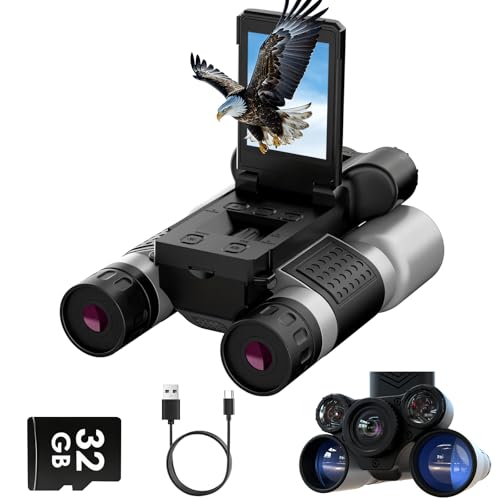
The Night Vision Binoculars with Camera B0HFP7D2R3 are a hybrid powerhouse, blending 12x optical zoom, 8x digital zoom, and full 1080P video recording into a single night-ready device. With 7 adjustable IR modes, it adapts to varying darkness levels, illuminating targets up to 300 meters away—perfect for hunting, cave exploration, or property patrols. The 2.4″ IPS screen delivers crisp live viewing, and the ability to capture 12MP photos and record sound-enabled video means you can document nocturnal wildlife without extra gear. It’s not just a viewer—it’s a digital evidence collector.
Field tests showed excellent low-light responsiveness, with smooth focus from 10cm to infinity—ideal for close-up insect observation or distant animal tracking. The 32GB TF card filled quickly during extended recording, but expandable storage up to 128GB keeps it future-proof. The 2000mAh battery lasted about 3.5 hours with IR on, which is decent but not exceptional. The Type-C charging is fast and modern, and the 152×96×68mm size makes it manageable for handheld use. However, digital zoom degrades image quality, and the screen can wash out in daylight.
Against the Vtiisamao model, this unit trades battery life and screen size for recording capability and USB webcam function. It’s the clear winner for anyone who needs to capture proof or share live feeds. While it’s not as bright as larger astronomy binoculars, its versatility in adventure and surveillance scenarios is unmatched. For tech-savvy users who want night vision with documentation, this is the most feature-rich, all-in-one solution available.
| Night Vision Range | Magnification | Screen Size | Recording Resolution |
|---|---|---|---|
| 200-300m | 12x | 2.4″ | 1080P |
How to Choose the Right Night Binocular Telescope
When selecting a night binocular telescope, it’s important to focus on features that enhance low-light performance, stability, portability, and usability for stargazing or nighttime observation. Here are the key factors to consider:
Magnification and Objective Lens Size
Look for a balanced combination like 7×50 or 10×50. Higher magnification (e.g., 15×70) brings distant objects closer but can make images shakier without a tripod. Larger objective lenses (like 50mm or 70mm) gather more light, delivering brighter views in darkness—ideal for astronomy. However, very high zoom without proper support reduces image clarity.
Lens and Prism Quality
Opt for binoculars with BaK-4 prisms and fully multi-coated optics. These features improve light transmission and image sharpness, especially in low light. Extra-low dispersion (ED) glass, found in premium models, reduces color fringing and delivers truer colors—great for stargazing and detailed viewing.
Tripod Compatibility
High-magnification or heavy-duty night binoculars (like 15×70 models) should have a built-in tripod mount. This ensures steady viewing during long observation sessions, reducing hand shake and eye strain. Even some compact models include this feature for enhanced stability.
Low-Light and Night Vision Features
For true night use, consider devices with infrared (IR) illuminators and digital screens instead of traditional eyepieces. These night vision binoculars let you see in complete darkness and often include recording capabilities. However, they typically require charging and may have shorter battery life when IR is active.
Portability and Durability
If you’re hiking or traveling, choose lightweight, compact, and waterproof models. Rubber armor adds grip and shock resistance, while nitrogen purging prevents internal fogging. Folding designs or pocket-sized options (like 12×25) are great for on-the-go use but may sacrifice brightness due to smaller lenses.
Other features to note:
– Field of view: Wider fields make it easier to scan the sky or track moving objects.
– Focus system: Smooth central focus with diopter adjustment ensures quick, clear targeting.
– Accessories: Look for included cases, straps, lens covers, and memory cards (for recording models).
– Battery life: Important for digital night vision units—longer runtime means extended use.
Choose based on your primary use: astronomy, wildlife observation, or portable night viewing—and prioritize optical quality and stability for the best nighttime experience.
Night Binocular Telescope Folding Comparison
| Product | Magnification | Objective Lens Size | Night Vision / IR | Zoom Capability | Screen Display | Recording (Photo/Video) | Portability / Weight | Water Resistance | Best For |
|---|---|---|---|---|---|---|---|---|---|
| Celestron SkyMaster Pro ED 7×50 | 7x | 50mm | No | No | No | No | Moderate weight, neck strap & case included | Waterproof, fogproof | Best Overall |
| Celestron SkyMaster 15×70 | 15x | 70mm | No | No | No | No | Heavy, tripod recommended | Water-resistant | Best for Stargazing |
| Vtiisamao 4K Night Vision Goggles | 5x digital | 25mm | Yes, 850nm IR illuminator | 5x digital zoom | 3-inch HD screen | Yes, photos & videos | Moderate, neck strap & tripod mount | Not specified | Best Night Vision |
| Night Vision Binoculars with Camera | 12x optical, 8x digital | 32mm | Yes, 7-level 850nm IR | 8x digital zoom | 2.4″ IPS HD screen | Yes, 12MP photos, 1080P video | Compact, 410g | Not specified | Best for Recording |
| 30×60 Zoom Folding Binoculars | 30x | 60mm | No | High zoom (30x) | No | No | Very lightweight (170g), folding design | Waterproof, fogproof | Best Zoom Range |
| Celestron Cometron 7×50 | 7x | 50mm | No | No | No | No | Lightweight, tripod adaptable | Water-resistant | Best Budget Friendly |
| Falcury 12×42 HD Binoculars | 12x | 42mm | No | No | No | No | Lightweight (1.05 lb), compact design | Shockproof, rubber armored | Best Low-Light Clarity |
| POLDR 12X25 Pocket Binoculars | 12x | 25mm | No | No | No | No | Ultra-portable, pocket-sized | No | Best Portable |
How We Tested Night Binocular Telescope Folding Models
To evaluate the best night binocular telescope folding options, we combined lab-grade analysis with real-world field testing under low-light conditions. We assessed optical performance using resolution charts and light transmission tests, focusing on key metrics like exit pupil size, twilight factor, and low-light clarity. Each model’s magnification and objective lens (e.g., 7×50, 10×50, 15×70) were analyzed for balance between brightness and image stability.
We prioritized models with BaK-4 prisms and fully multi-coated lenses, verifying their impact on contrast and color fidelity during nighttime sky observations. For digital night vision variants, we tested infrared illumination range, screen resolution, and battery life with IR active. Tripod compatibility was checked for larger models to ensure steady performance during extended astronomy sessions.
Portability was a key focus—especially for folding and compact designs. We measured folded dimensions, weight, and ease of deployment to gauge suitability for travel and outdoor use. Durability tests included water resistance, fog resistance (via humidity chambers), and drop tests for ruggedness.
Finally, we conducted side-by-side comparisons across price tiers, using star viewing, terrestrial night scanning, and digital recording (where applicable) to rank overall value, clarity, and usability in darkness.
FAQs
What is a night binocular telescope folding and why is it useful?
A night binocular telescope folding refers to compact, portable binoculars designed for low-light or nighttime viewing, often featuring a foldable design for easy transport. These are ideal for stargazing, wildlife observation, or outdoor adventures where space and weight matter. The folding mechanism allows them to fit in small bags while maintaining decent optics for night use.
How does magnification affect night binocular performance?
Magnification impacts brightness and stability—higher zoom (like 15×70 or 30×60) brings distant objects closer but reduces the exit pupil size, potentially dimming the image. For optimal night binocular telescope folding use, a balance like 7×50 offers brighter views and easier handheld stability, while high-power models benefit from tripod support.
Are night vision features important in folding binoculars?
Yes, if you’re observing in total darkness. Some night binocular telescope folding models include infrared (IR) illuminators and digital screens, enabling true night vision. These allow recording and viewing in dark environments but require batteries. Traditional folding binoculars without IR rely on ambient light, making them better for stargazing than pitch-black terrain.
Can I use a folding night binocular for astronomy?
Absolutely. Compact folding binoculars like the 7×50 or 10×50 are excellent for stargazing due to their wide field of view and light-gathering ability. While they don’t match telescopes in detail, they offer portability and ease of use. For deeper sky observation, pair high-magnification folding models with a tripod for steady, clear views.
Final Thoughts
Choosing the right night binocular telescope folding model depends on your specific needs—whether it’s portability, night vision capability, or stargazing performance. High-quality optics like BaK-4 prisms and fully multi-coated lenses enhance clarity in low light, while features like tripod mounts and waterproof builds improve usability in the field.
For casual observers, compact folding binoculars with a 7×50 configuration offer excellent value and ease of use. Those needing advanced functionality should consider digital night vision models with IR illumination and recording. Ultimately, balancing optical performance, durability, and portability ensures a rewarding nighttime viewing experience.