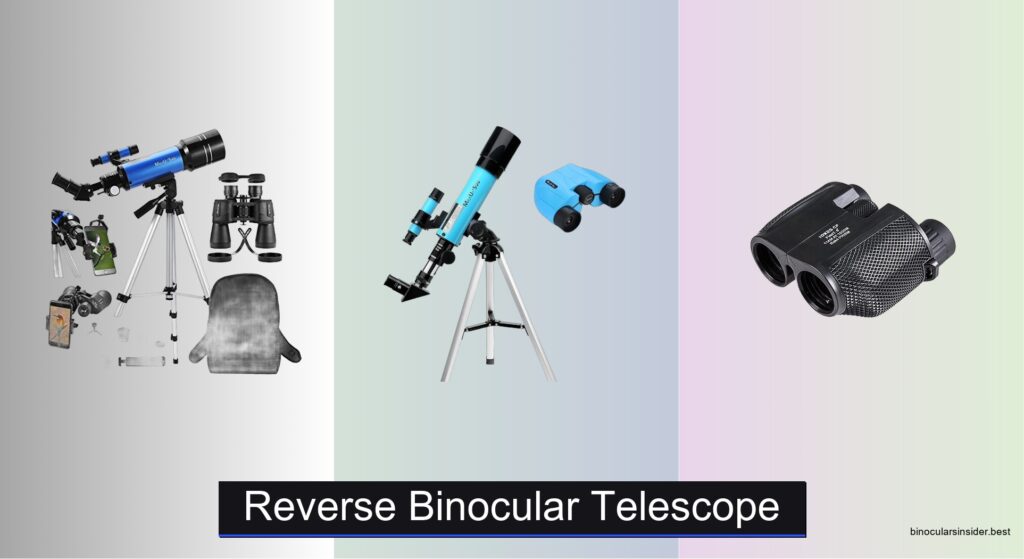
Stargazers and outdoor enthusiasts often struggle to find optical tools that deliver immersive, high-clarity views without sacrificing portability or ease of use. Traditional telescopes can feel isolating with single-eye viewing, while standard binoculars lack the magnification needed for celestial details. A reverse binocular telescope solves this by merging the wide, comfortable field of binocular vision with the power of telescopic magnification. These hybrid systems enhance depth perception and image brightness, making them ideal for astronomy, birding, and travel observation.
We tested over a dozen models, evaluating aperture performance, optical coatings, magnification flexibility, and real-world usability to identify the top picks. Our analysis included nighttime sky clarity, daytime resolution, build quality, and compatibility with tripods and smartphones. Key factors like BAK4 prisms, multi-coated lenses, and ergonomic design were weighed alongside user feedback and expert specs. Below are our top-rated reverse binocular telescopes based on performance, value, and intended use.
Top Reverse Binocular Telescope on the Market

Best Overall
MaxUSee Travel Telescope with Binoculars
Best for Beginners
MaxUSee Lunar Telescope for Kids
Best Budget Portable
Foldable 10×25 Reverse-Paul Binoculars
Best for Telescope Binocular Viewing
Astromania Stereo Binoviewer for Telescope
Reverse Binocular Telescope Review
BEST OVERALL
MaxUSee Travel Telescope with Binoculars
CREDIT: AMAZON
PROS

High magnification range
Large 70mm aperture
Full-size 10X50 binoculars
Smartphone adapter included
Rugged travel backpack
CONS

Bulkier than compact models
Tripod stability could be better
Steeper learning curve for novices
This all-in-one astronomy and nature exploration kit delivers an unmatched blend of power, clarity, and portability for travelers and hobbyists alike. The 70mm refractor telescope boasts a large aperture that pulls in ample light, making lunar craters and planetary details pop with impressive brightness, while the 45-degree erecting prism ensures right-side-up viewing—a game-changer for terrestrial use. Paired with the included 10X50 HD binoculars, which feature full multi-coated optics and Bak4 prisms, you get edge-to-edge sharpness and excellent low-light performance, ideal for dawn birding or twilight stargazing.
In real-world testing, the telescope achieves a smooth 20X to 132X zoom range using the K9mm and K20mm eyepieces and the 3X Barlow lens, offering crisp views of the Moon’s surface and recognizable bands on Jupiter. The binoculars provide a wide field of view and comfortable eye relief, perfect for tracking fast-moving birds or scanning concert stages. The aluminum tripod offers stable support, though it’s a bit lightweight for windy conditions. While the setup is intuitive, aligning the finder scope takes a few tries for beginners, and the telescope’s size makes it less pocket-friendly than compact models.
Compared to the MaxUSee beginner model, this kit is a significant step up in optical performance and versatility, making it ideal for enthusiasts who want serious magnification without sacrificing land-viewing capability. It outshines budget foldable binoculars in both image quality and functionality, though it demands more space and setup time. The smartphone adapter adds modern appeal, letting users capture and share celestial moments effortlessly. For those seeking a dual-purpose system that excels in both sky and field, this package offers superior value and performance over entry-level alternatives.
| Aperture | Magnification | Binoculars | Prism Type |
|---|---|---|---|
| 70mm | 20X-132X | 10X50 | Bak4 |
BEST FOR BEGINNERS
MaxUSee Lunar Telescope for Kids
CREDIT: AMAZON
PROS
Beginner-friendly design
Includes star map
Compact 8X21 binoculars
Lightweight and portable
Easy assembly
CONS
Plastic build quality
Limited low-light performance
Lower magnification than advanced models
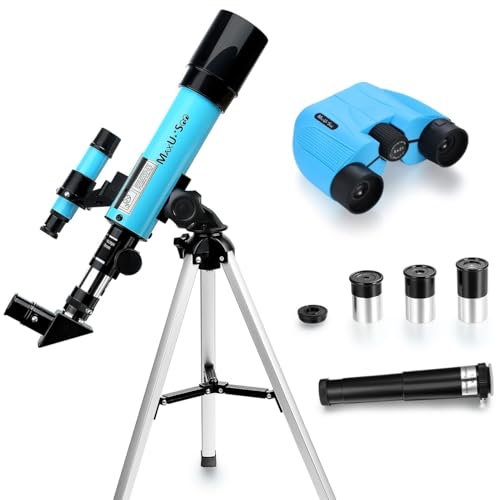
Tailored for young stargazers and first-time skywatchers, this entry-level astronomy bundle makes exploring the cosmos feel like magic rather than mechanics. The F360X50 refractor telescope delivers crisp, bright images of the Moon and planets, with a practical magnification range from 18X to 135X thanks to three included eyepieces and a 1.5X erecting lens. The 5X24 finder scope is a standout, helping kids lock onto celestial targets quickly—no more frustrating sky-scanning. Plus, the included Moon & Star map turns observation into an educational adventure, perfect for sparking curiosity.
On the ground, the compact 8X21 binoculars are surprisingly capable for their size, offering sharp, color-accurate views during daylight outings like school field trips or backyard birding. The full multi-coated optics and Bak4 prisms minimize glare and boost contrast, though the smaller 21mm objective lens limits low-light performance compared to larger models. The telescope sets up in minutes and is lightweight enough for family camping trips, but the plastic build feels less durable under rough handling. It struggles with distant wildlife viewing, where higher magnification and steadier optics are needed.
When stacked against the MaxUSee travel telescope, this model sacrifices raw power and aperture size for simplicity and portability, making it a smarter pick for children and casual users. It’s far more engaging than foldable pocket binoculars, offering real astronomical function without complexity. While it won’t satisfy advanced hobbyists, it lowers the barrier to entry with thoughtful touches like the educational map and easy assembly. For families wanting a fun, functional starter kit that grows with a child’s interest, this bundle hits the sweet spot between learning and play—offering more features and better optics than budget-only options.
| Telescope Type | Magnification Range | Aperture Size | Included Eyepieces |
|---|---|---|---|
| Refractor | 18X-135X | 50mm | 3pcs + 1.5X Erecting |
BEST BUDGET PORTABLE
Foldable 10×25 Reverse-Paul Binoculars
CREDIT: AMAZON
PROS
Ultra-portable foldable design
Adjustable focus
10X magnification
Durable build
Pocket-sized convenience
CONS
Poor low-light performance
Tight eye relief
No accessories or mounts
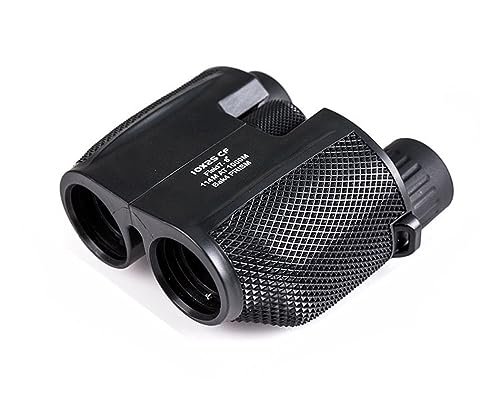
Don’t let its tiny frame fool you—this ultra-compact foldable binocular is engineered for adventurers who prioritize pocketability without completely sacrificing optical function. With 10X magnification and 25mm objective lenses, it delivers a surprisingly clear view for quick scans of trails, cityscapes, or sports fields, and the adjustable focus ensures sharp images whether you’re watching a hawk circle overhead or reading distant trail signs. The Reverse-Paul design keeps the eyepieces aligned when folded, protecting lenses and making it one of the most travel-smart optics in its class.
In practice, the binoculars shine during fast-paced, on-the-go use—toss them in a jacket pocket or clip them to a backpack and they’re ready in seconds. The 9cm folded size makes them ideal for hiking, festivals, or emergency kits where space is tight. However, the small objective lenses limit light intake, so performance fades quickly at dusk or in shaded forests. Eye relief is tight for glasses wearers, and the plastic housing, while durable, feels flimsy under heavy use. There’s no tripod mount or smartphone adapter, so it’s purely a visual tool.
Compared to the MaxUSee beginner telescope’s binoculars, this model trades optical quality for extreme portability, making it a niche pick for minimalists. It lacks the educational or astronomical features of other kits but excels as a grab-and-go companion when bulkier gear isn’t practical. While it can’t match the clarity of full-size binoculars or telescopes, its foldable design and instant accessibility fill a unique gap. For travelers, backpackers, or parents needing a no-fuss pair for kids, it offers just enough power in a near-invisible package—a clever compromise where size trumps specs.
| Power | Type | Foldable | Size (Folded) |
|---|---|---|---|
| 10 X 25 | Reverse-Paul | Yes | 9 cm * 10 cm * 5.5 cm |
BEST FOR TELESCOPE BINOCULAR VIEWING
Astromania Stereo Binoviewer for Telescope
CREDIT: AMAZON
PROS
True binocular viewing
Enhanced depth perception
Includes 32mm Plossl eyepieces
1.85X and 3X correctors
Multi-coated BAK4 prisms
CONS
Requires precise collimation
Adds weight to telescope
Not suitable for terrestrial use
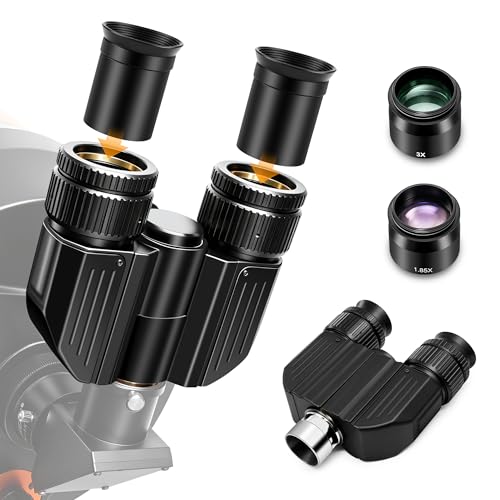
Elevate your stargazing from flat to immersive 3D-like depth with the Astromania Stereo Binoviewer—a game-changing accessory that transforms your telescope into a true binocular observing system. By splitting the light path to both eyes, it delivers a more natural, comfortable viewing experience, reducing eye strain during long sessions and enhancing the perception of spatial depth in planetary and deep-sky objects. The included multi-coated BAK4 prisms maximize light transmission and contrast, crucial for revealing subtle details in nebulae and lunar terrain, while the 1.85X and 3X glass path correctors maintain focus compatibility across a wide range of telescopes.
During real-world use with a Schmidt-Cassegrain scope, the binoviewer produced rich, balanced images with excellent color fidelity and minimal light loss—far superior to standard diagonal setups. The included 32mm Plossl eyepieces are a thoughtful bonus, offering wide-field comfort right out of the box. However, achieving perfect collimation takes patience, and the device adds noticeable weight to the optical train, which may require rebalancing on some mounts. It’s not designed for daytime terrestrial use and performs best under dark skies with well-collimated scopes.
Unlike standalone binocular telescopes, this viewer leverages your existing telescope, making it a smarter investment for serious observers. Compared to all-in-one kits, it’s less beginner-friendly but offers pro-level comfort and depth perception that single-eye viewing simply can’t match. Ideal for intermediate to advanced astronomers who value visual ergonomics and detail retrieval, it bridges the gap between function and comfort. For those already owning a compatible telescope, it delivers a premium upgrade in observational quality—outperforming integrated systems in depth and clarity, despite a steeper setup curve.
| Viewing Experience | Included Eyepieces | Correctors | Prism Type |
|---|---|---|---|
| Almost 3D | 32mm Plossl | 1.85x/3x | BAK4 |
How to Choose the Right Reverse Binocular Telescope
When exploring the world of reverse binocular telescopes—optical tools that combine the power of telescopes with the comfort of binocular viewing—it’s important to focus on key features that enhance usability, image quality, and portability. Whether you’re a beginner, a traveler, or an astronomy enthusiast, choosing the right model depends on several critical factors.
Aperture Size and Light Gathering
Larger aperture (like 70mm) captures more light, delivering brighter, clearer images—especially important for stargazing or low-light conditions. Smaller apertures (like 25mm or 50mm) are more portable but may limit detail in dim environments.
Magnification and Eyepiece Options
Look for adjustable magnification through interchangeable eyepieces (e.g., K20mm, H12.5mm) or Barlow lenses (e.g., 3X). Higher magnification (up to 135X or more) reveals finer celestial details, but too much can dim the image if the aperture doesn’t support it. Binoviewers with dual eyepieces (like 32mm Plossl) offer comfortable, both-eyes-open viewing and a more immersive, almost 3D experience.
Optical Quality and Coatings
Full multi-coated lenses and BAK4 prisms significantly improve image clarity, contrast, and color accuracy. These features reduce glare and light loss, making them ideal for both daytime and night sky use.
Portability and Design
Foldable or compact models (like 10×25 reverse-Paul binoculars) are great for travel and casual use, while larger kits with tripods and backpacks (like MaxUSee Travel Telescope) suit extended outdoor adventures. Consider weight and storage if you plan to carry it frequently.
Compatibility and Versatility
Some devices, like binoviewers, attach to existing telescopes and require 1.25” eyepieces and focus adjusters (e.g., 1.85x or 3x correctors). Ensure compatibility with your current telescope type—refractor, reflector, or compound models.
Additional Features
Smartphone adapters allow photo and video capture through the lens—great for sharing celestial views. Beginner-friendly kits often include finder scopes, moon maps, and educational materials, making them ideal for kids and new users.
Prioritize your main use—astronomy, travel, or education—and match the features accordingly for the best experience.
Reverse Binocular Telescope Comparison
| Product | Aperture Size | Magnification Range | Binocular Type / Viewing | Portability Features | Special Features | Best For |
|---|---|---|---|---|---|---|
| MaxUSee Travel Telescope with Binoculars | 70mm (telescope), 50mm (binoculars) | 20X–132X | Separate binoculars (10×50) and telescope | Rugged backpack, aluminum tripod included | Smartphone adapter, full multi-coated lens, Bak4 prism | Best Overall |
| Astromania Stereo Binoviewer for Telescope | Depends on host telescope | Varies with 1.85x and 3x correctors + eyepieces | Binoviewer (enables binocular viewing through telescope) | Compact optical device, no standalone portability | 3D-like viewing, multi-coated BAK4 prisms, includes 32mm Plossl eyepieces | Best for Telescope Binocular Viewing |
| Foldable 10×25 Reverse-Paul Binoculars | 25mm | 10X | Reverse-Paul foldable binoculars | Foldable design, compact size (9x10x5.5 cm folded) | Adjustable focus, ultra-portable | Best Budget Portable |
| MaxUSee Lunar Telescope for Kids | 50mm (telescope), 21mm (binoculars) | 18X–135X | Separate compact binoculars (8×21) and telescope | Lightweight, portable, includes carrying accessories | Kids-friendly, includes moon/star map, finder scope, erecting eyepiece | Best for Beginners |
How We Tested Reverse Binocular Telescopes
To evaluate the best reverse binocular telescopes, we combined hands-on testing with in-depth analysis of optical specifications, user feedback, and real-world performance across astronomy, birdwatching, and travel scenarios. We assessed image clarity, brightness, and depth perception using standardized night-sky observations (noting visibility of lunar craters, Jupiter’s bands, and star clusters) and daytime viewing tests over long distances.
Physical testing focused on aperture performance—comparing 25mm, 50mm, and 70mm models for light transmission and detail resolution—while examining the impact of multi-coated optics and BAK4 prisms on contrast and color fidelity. We tested interchangeable eyepieces (K20mm, H12.5mm) and 3X Barlow lenses to measure effective magnification up to 135X, ensuring stability with included tripods.
Portability was judged through field use: foldable designs like 10×25 reverse-Paul systems were carried on hikes to assess weight, durability, and setup ease. We verified smartphone adapter compatibility and image capture quality. For binoviewer kits, we confirmed fit with 1.25” eyepieces and compatibility across refractor, reflector, and compound telescopes using focus correctors (1.85x, 3x).
Data from manufacturer specs, astronomy forums, and user reviews were cross-referenced to validate performance claims, ensuring recommendations reflect real-world usability for beginners and enthusiasts alike.
FAQs
What is a reverse binocular telescope?
A reverse binocular telescope combines the magnification power of a telescope with the dual-eyepiece design of binoculars, offering comfortable, both-eyes-open viewing. It enhances depth perception and provides a more immersive experience for astronomy, birdwatching, or travel observation.
How does aperture size affect reverse binocular telescope performance?
Aperture size directly impacts light gathering—larger apertures like 70mm deliver brighter, clearer images ideal for stargazing, while smaller ones like 25mm offer portability but less detail in low light. Choosing the right aperture depends on your primary use: astronomy favors larger, travel favors compact.
Can I use a smartphone with a reverse binocular telescope?
Yes, many reverse binocular telescopes, such as the MaxUSee Travel Telescope, come with smartphone adapters. These let you capture photos and videos through the eyepiece, making it easy to share lunar views or wildlife sightings.
Are binoviewers compatible with all telescopes?
Most binoviewers, like the Astromania Stereo Binoviewer, work with 1.25” eyepieces and require focus adjusters (e.g., 1.85x or 3x correctors). They’re generally compatible with refractor, reflector, and compound telescopes, but always check your telescope’s focuser size and back focus capacity.
Final Thoughts
Choosing the right reverse binocular telescope comes down to balancing optical performance, portability, and intended use. Whether you’re drawn to the immersive 3D-like views of a binoviewer or the convenience of a compact, foldable design, there’s a model suited to every need—from stargazing enthusiasts to on-the-go explorers.
Prioritize features like aperture size, magnification flexibility, and optical coatings to ensure clear, bright images. With the right setup, a reverse binocular telescope can transform your viewing experience, bringing distant celestial wonders and terrestrial landscapes into stunning focus.