You’ve held binoculars with mysterious numbers stamped on the side—10×42, 8×25, 12×50—and wondered what they truly mean. Understanding binocular size meaning is the non-negotiable first step to avoiding frustrating purchases that leave you squinting at blurry birds or struggling with shaky views. These numbers aren’t marketing fluff; they dictate everything from image brightness to how steady your hands need to be. Get this wrong, and you’ll end up with gear that’s either too bulky for hiking or too dim for dawn birding. This guide cuts through the confusion using real optical science to show exactly how magnification and lens size impact your experience—so you can confidently choose binoculars that match your adventures.
Your binoculars’ size specifications directly determine whether you’ll see a crisp eagle soaring at 500 yards or just a shaky blob. The stakes are high: picking the wrong size means missing critical details during wildlife spotting, straining your eyes at concerts, or lugging unnecessary weight on backpacking trips. By the end of this guide, you’ll decode any binocular label, predict low-light performance, and select the perfect pair for your specific needs—no optics degree required.
Decoding Binocular Size Meaning: Magnification and Lens Diameter

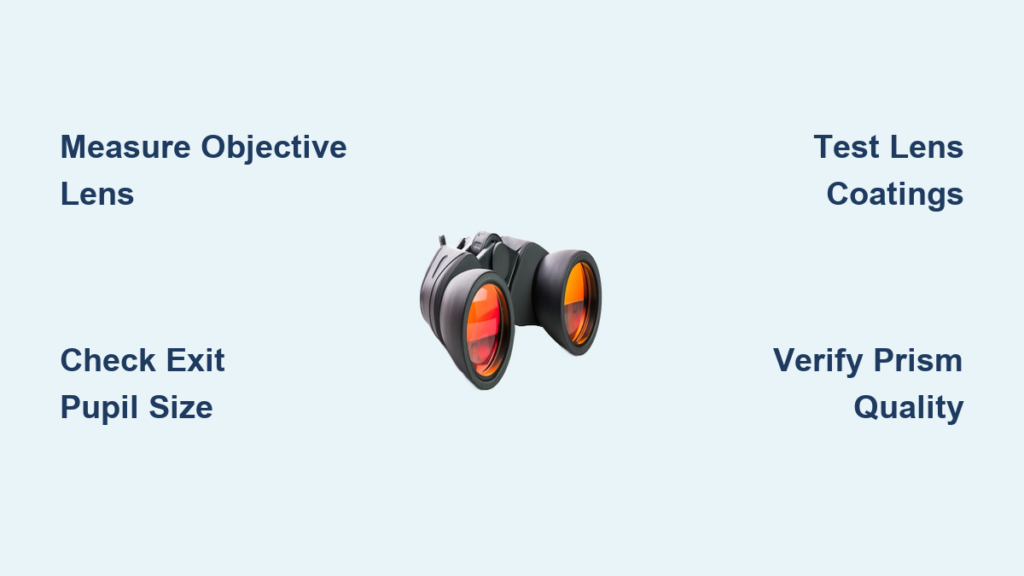
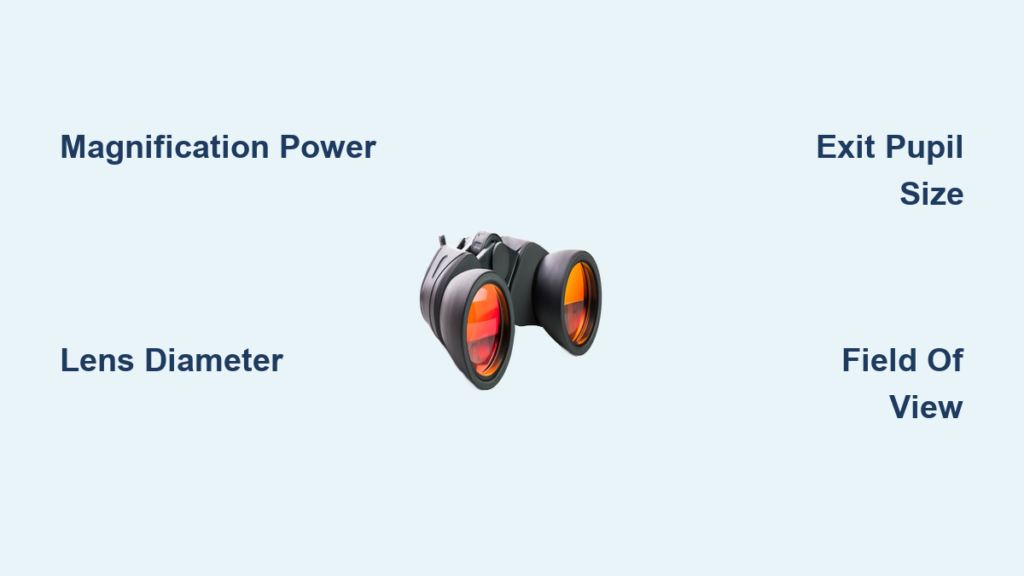
Every binocular model’s label reveals two vital specifications separated by an “x,” like 8×42. These numbers define your viewing experience, not arbitrary sizing like clothing. The first number is magnification power—how many times closer objects appear. A 10x binocular makes a deer 1,000 feet away seem just 100 feet distant. The second number is the objective lens diameter in millimeters—the size of the front light-gathering lenses. In 8×42 binoculars, those front lenses measure 42mm across.
This pairing creates critical optical relationships. Calculate your exit pupil by dividing the lens diameter by magnification (e.g., 42 ÷ 8 = 5.3mm). This number reveals low-light capability: a larger exit pupil (5mm+) floods your eyes with more light when pupils dilate at dusk. Meanwhile, the field of view—how much landscape you see at once—shrinks as magnification rises. An 8x model typically shows 360+ feet at 1,000 yards, while a 12x might show only 250 feet, making it harder to track a squirrel darting through trees. Ignoring these relationships guarantees disappointment.
Why Magnification Isn’t “More Is Better”
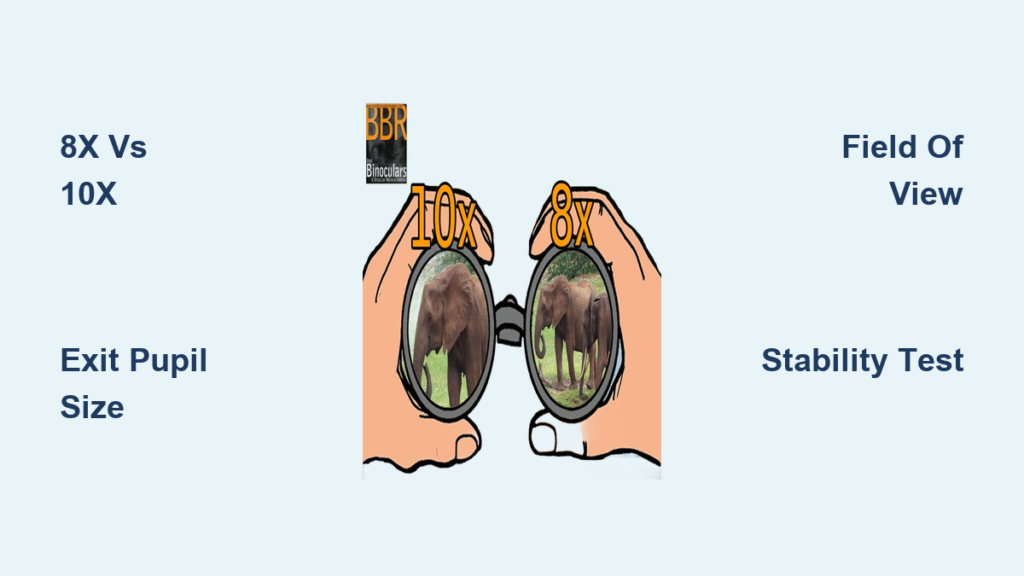
Higher magnification seems appealing—until you experience the trade-offs firsthand. 7x to 8x magnification delivers the sweet spot for handheld stability and wide-area scanning. Birders tracking warblers through dense foliage rely on this range because minor hand tremors won’t blur the image, and the broad field of view (often 350+ feet at 1,000 yards) keeps moving subjects in sight. These models also gather more light per unit of magnification, yielding brighter daytime images.
10x magnification steps up detail for distant subjects but demands discipline. At this power, every heartbeat transmits vibration—experienced users learn to brace elbows against their ribs or use fence posts for steadying. The narrower field of view (typically 300-325 feet at 1,000 yards) makes locating targets slower, frustrating beginners. 12x and above belongs strictly to tripod territory. Handheld use above 10x turns landscapes into jittery slideshows; only marine spotters or astronomers using mounts should consider these.
Critical mistake to avoid: Choosing 12x binoculars for hiking because “more power seems useful.” Without a tripod, you’ll rarely see usable detail beyond 500 yards. Stick to 8x-10x for all-day handheld comfort.
How Lens Size Dictates Low-Light Performance
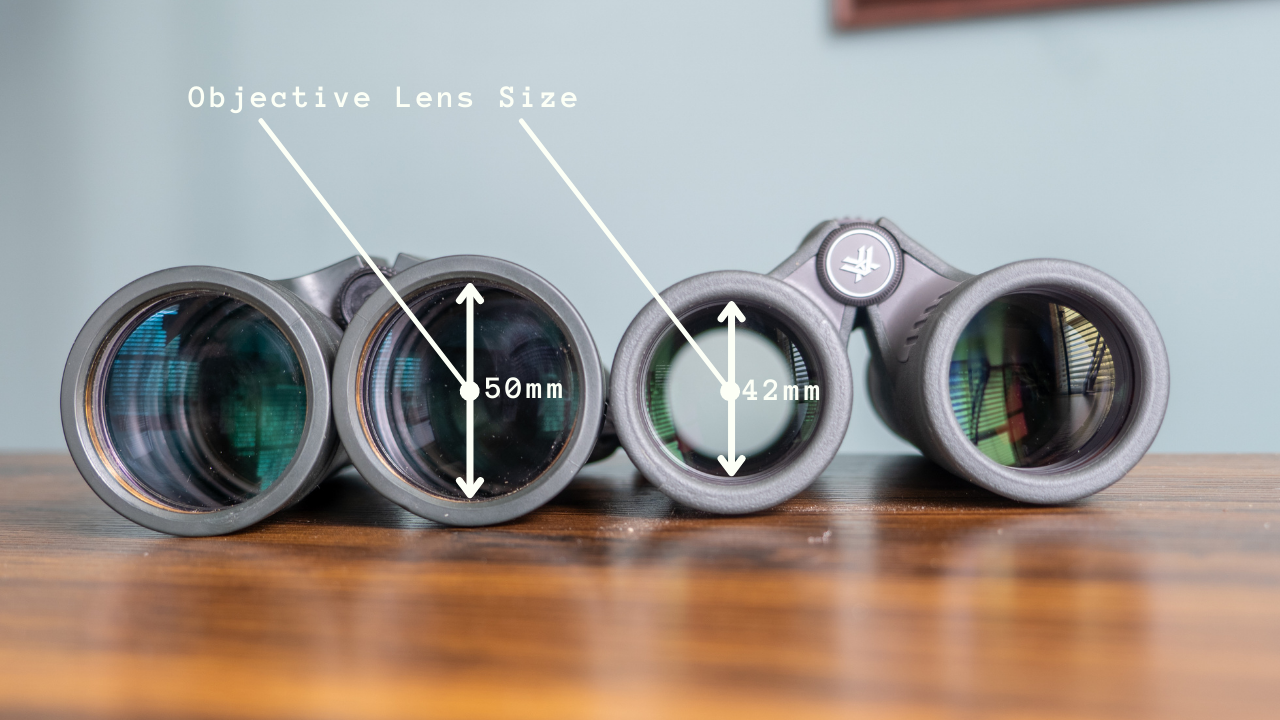
That second number (objective lens diameter) is your secret weapon for dawn hikes or forest trails. Larger lenses (42mm-50mm) act like light buckets—more surface area pulls in photons, creating brighter, higher-contrast images when light fades. A 10×50 model gathers 56% more light than a 10×42, transforming dim owl sightings into visible silhouettes. This directly impacts your exit pupil: 7×50 binoculars yield a 7.1mm exit pupil, perfectly matching fully dilated human pupils in darkness.
Compact models (25mm-32mm lenses) prioritize portability over performance. An 8×25 slips into any jacket pocket but struggles when clouds roll in—its 3.1mm exit pupil can’t match your eye’s 5mm+ dilation at twilight. You’ll see grainy, low-contrast views where a 42mm model reveals feather details. Mid-size (36mm-40mm) options like 8×36 bridge this gap, offering 85% of a 42mm’s light grasp in a slimmer chassis.
Pro tip: For pre-dawn birding, prioritize exit pupils above 4mm (e.g., 8×32 = 4mm). Below this threshold, images turn muddy as natural light drops.
Binocular Size Meaning for Your Specific Activity
Your ideal binocular size depends entirely on where and how you’ll use them. Generic “best all-around” advice fails because binocular size meaning shifts dramatically by use case. Match these proven pairings to avoid buyer’s remorse.
Birding and Wildlife: Why 8×42 Dominates
Professional birders overwhelmingly choose 8×42 binoculars—and for ironclad optical reasons. The 8x power provides rock-steady handheld viewing during marathon scanning sessions, while the 42mm lenses deliver maximum brightness in shadowy woodlands. Crucially, the wide 367-foot field of view (at 1,000 yards) keeps erratic warblers or darting hawks in sight. Upgrading to 10×42 trades this advantage for 12% more magnification but narrows the view by 15% and amplifies hand shake—only worth it if you regularly observe stationary raptors at extreme range.
Warning: Avoid 10×50 models for active birding. Their extra weight (often 30% heavier than 8×42) causes fatigue during all-day hikes, and the narrow field of view makes tracking challenging. Save these for stationary owl watches at dusk.
Hiking and Travel: Compact Models Done Right
When every ounce counts on multi-day treks, 8×25 or 8×32 binoculars become essential. These slip into hip pockets without weighing you down, yet still deliver usable daylight views. However, understand their hard limits: below 300 yards, they perform well, but dim rapidly after sunset. For backpackers prioritizing low-light capability, 8×32 models are the strategic compromise—they add just 2 ounces over 25mm versions but boost light grasp by 64% (exit pupil jumps from 3.1mm to 4.0mm). Never sacrifice lens size for extreme compactness if you’ll encounter variable light.
Marine and Astronomy: When Big Lenses Are Non-Negotiable

Boaters and stargazers live by the rule: bigger objective lenses win. On choppy water, 7×50 binoculars are legendary because their massive 7.1mm exit pupil matches night-adapted eyes, turning faint navigation buoys into clear targets. Similarly, astronomy demands 50mm+ lenses—10×50 models reveal the Orion Nebula’s texture that 10x42s show as a faint smudge. But respect physics: these require bracing against railings or tripods. Image-stabilized 15×50 binoculars solve this for boats but cost 3x more.
Beyond Size: Non-Negotiable Features for Real-World Use
Numbers alone won’t save you if critical features are missing. Fully multi-coated lenses (all air-to-glass surfaces treated) transmit 95%+ of light versus 80% in basic coated optics—this difference turns marginal dawn views into usable observations. Always verify this spec; cheap “multi-coated” claims often apply coatings to only one lens surface.
Waterproof and fog-proof construction is non-optional for outdoor use. Nitrogen-purged, O-ring sealed binoculars survive river splashes and altitude changes without internal fogging—critical when spotting bears in misty valleys. Skip this, and a sudden rainstorm could ruin your optics permanently.
Eye Relief: The Glasses-Wearer’s Lifeline
If you wear eyeglasses, eye relief (15mm+) determines whether you see the full image. Short eye relief (under 14mm) forces you to remove glasses, defeating their purpose. Twist-up eyecups let you adjust for glasses-on viewing—test this in-store by holding binoculars to your eyes while wearing specs. Models like the Nikon Monarch M7 (16.3mm eye relief) are engineered for comfortable glasses use.
Final Checklist: Choosing Your Perfect Pair
Don’t leave binocular selection to chance. Before buying, verify these binocular size meaning essentials:
– For handheld use: Never exceed 10x magnification without a tripod plan
– For low-light: Prioritize exit pupils >4mm (e.g., 8×32, 7×50)
– For travel: Compact 8×25 or 8×32 models save weight with minimal performance loss
– Critical features: Fully multi-coated lenses + waterproof/fog-proof sealing
Understanding binocular size meaning transforms guesswork into confidence. When you see “10×42” on a shelf, you’ll instantly know it’s a versatile all-rounder for daytime wildlife but struggles in forests after 4 PM. That “8×25” label? Perfect for stadium seats but useless at dawn. This knowledge prevents costly mistakes and ensures your optics disappear into the experience—so you focus on the eagle’s talons, not your shaky hands. Grab your ideal pair, head into the wild, and finally see what you’ve been missing.