You’re setting up a microscope for electronics repair, biological microinjection, or materials inspection—only to find that your tools can’t fit between the objective lens and the sample. The issue? Working distance (W.D.)—the critical space between the front lens of the objective and the specimen when in sharp focus. Unlike magnification or field of view, working distance isn’t something you calculate from a formula. It’s a fixed optical specification determined during lens design. Yet, knowing how to determine, interpret, and apply it is essential for choosing the right microscope setup.
While high-magnification objectives deliver incredible detail, they often come with working distances under 0.1 mm, making them impractical for any task requiring physical access. In contrast, stereo microscopes can offer over 50 mm of clearance—perfect for soldering or dissection. This guide shows you exactly how to find working distance values, understand how magnification and numerical aperture affect clearance, and select the best objective for your application. You’ll learn where to locate W.D. data, why you can’t derive it mathematically, and how accessories and sample preparation impact usable space.
Find Working Distance on Objective Lens
Check Objective Barrel Engraving
The fastest and most accurate way to determine working distance is to inspect the objective’s barrel. Manufacturers like Olympus, Nikon, Zeiss, and Leica typically engrave key specifications directly on the lens housing. Look for a marking labeled “W.D.”, followed by a number and unit—usually millimeters.
For example:
– “W.D. 4.0” means a 4.0 mm working distance
– “W.D. 8.0” indicates an ultra-long working distance objective
This engraved value is the actual distance from the front lens surface to the focused specimen plane. No calculation needed—just direct reading.
Other common engravings include:
– Magnification (e.g., 10x, 40x)
– Numerical aperture (e.g., NA 0.25, 0.65)
– Cover slip correction (e.g., “0.17” for 0.17 mm thickness)
– Tube length (e.g., “160” or “∞” for infinity-corrected systems)
Always verify the W.D. here before relying on memory or generic charts, especially when switching between standard, LWD (Long Working Distance), or immersion objectives.
Read Manufacturer Datasheets
If the engraving is worn, too small, or absent, consult the manufacturer’s product datasheet or official website. These documents provide precise optical specifications, including exact working distance, correction types, and compatibility notes.
For instance:
– A standard 100x oil immersion objective may list W.D. = 0.13 mm
– A 50x LWD objective might have W.D. = 8.0 mm—unusually long for its magnification
Datasheets also clarify whether an objective is designed for dry use, water immersion, or cover slip-mounted samples. This ensures you’re not only getting the correct W.D. but also using the lens under optimal conditions.
Understand Magnification vs. Working Distance

Higher Magnification = Shorter Working Distance
There is a strong inverse relationship between magnification and working distance. As magnification increases, the objective must sit closer to the specimen to achieve focus and resolution—dramatically reducing usable clearance.
Typical working distance ranges:
| Magnification | Approximate W.D. |
|---|---|
| 4x | 10–20 mm |
| 10x | 4–8 mm |
| 40x | 0.5–0.7 mm |
| 100x (oil) | <0.1 mm |
Switching from a 4x to a 100x objective reduces working space by more than 99%. If your work involves tools or thick samples, high magnification may be impractical regardless of image quality.
Numerical Aperture Also Reduces Clearance
Numerical aperture (NA), which determines resolution and light-gathering ability, also impacts working distance. High-NA objectives require tighter proximity to the sample.
For example:
– A 20x objective with NA 0.40 might have W.D. = 2.0 mm
– A 20x LWD objective with lower NA (0.25) could offer W.D. = 10.0 mm
Higher NA improves image clarity but sacrifices physical access. Always balance resolution needs with workspace requirements.
Types of Objectives and Their W.D. Ranges

Standard Objectives
Designed for routine slide microscopy, these follow predictable W.D. trends:
– 4x: ~15 mm
– 10x: ~6 mm
– 40x: ~0.6 mm
– 100x: ~0.1 mm
Best for flat, cover-slipped specimens. Not suitable for tool-based work or 3D samples.
Long Working Distance (LWD) Objectives
Engineered for industrial or biological applications requiring tool access:
– 20x LWD: W.D. up to 10 mm
– 50x LWD: W.D. up to 8 mm
These maintain moderate magnification and resolution while providing significantly more clearance than standard objectives.
Stereo/Dissecting Microscopes
Offer the longest working distances:
– At 1x: Up to 50 mm
– At 10x zoom: Drops to ~5–10 mm
Ideal for soldering, dissection, or inspecting bulky components where hand tools must operate under the lens.
Why You Can’t Calculate W.D. Directly
No Universal Formula Exists
Unlike magnification or field of view, there is no formula to calculate working distance. It is a design-specific parameter determined by lens curvature, element spacing, and housing. You cannot derive it from magnification, NA, or tube length.
Avoid assumptions like:
❌ W.D. = Tube Length / Magnification
❌ W.D. = f(NA, magnification)
These are incorrect. W.D. is fixed by the manufacturer and must be obtained from labels or datasheets.
Focal Length Gives Clues—but Not W.D.
In finite systems (e.g., 160 mm tube length), you can estimate effective focal length (f):
$$
f \approx \frac{\text{Tube Length}}{\text{Magnification}}
$$
Example:
A 20x objective with 200 mm tube length:
$$
f = \frac{200}{20} = 10 \text{ mm}
$$
While this informs optical design, focal length ≠ working distance. The actual W.D. is always less than f and depends on internal lens configuration.
Infinite Systems Don’t Change W.D.
In infinity-corrected systems (marked “∞”), a tube lens forms the image. Changing the tube lens focal length alters total magnification:
$$
\text{Total Mag} = \text{Obj Mag} \times \frac{\text{Tube Lens f}}{\text{Design f}}
$$
But working distance remains unchanged—it is still determined solely by the objective’s internal design.
How to Measure Working Distance Physically
Use a Precision Probe
To verify W.D. experimentally:
- Focus on a flat, reflective surface (e.g., glass slide).
- Lower a thin probe (e.g., feeler gauge or needle) from beneath the objective.
- Stop when contact is made with the specimen.
- Measure the gap between the front lens and the specimen surface.
⚠️ Caution: Never force contact—risk damaging the objective or probe. This method works best with low-power objectives.
Employ Stage Micrometer for Indirect Check
While not a direct W.D. measurement, a stage micrometer helps confirm magnification and system alignment:
$$
\text{Field of View} = \frac{\text{Sensor Width}}{\text{Magnification}}
$$
Large deviations may indicate incorrect adapters or tube length—factors that shift the focal plane and affect perceived W.D.
Factors That Affect Usable Working Distance
Cover Slip Thickness Matters
Objectives corrected for 0.17 mm cover slips assume the specimen is beneath glass. The W.D. includes this thickness in its optical path.
Using a thicker or absent cover slip:
– Shifts focal plane
– May reduce effective clearance
– Degrades image quality
Always match cover slip specs to the objective.
Accessories Reduce Physical Clearance
Adding filters, protective windows, or adapters:
– Does not change optical W.D.
– Reduces physical space for tools or thick samples
Example: A 0.5 mm protective window cuts usable clearance by 0.5 mm—even if the objective’s W.D. is 8.0 mm.
Account for all added components when planning workspace.
Applications Requiring Long Working Distance
Soldering and Rework
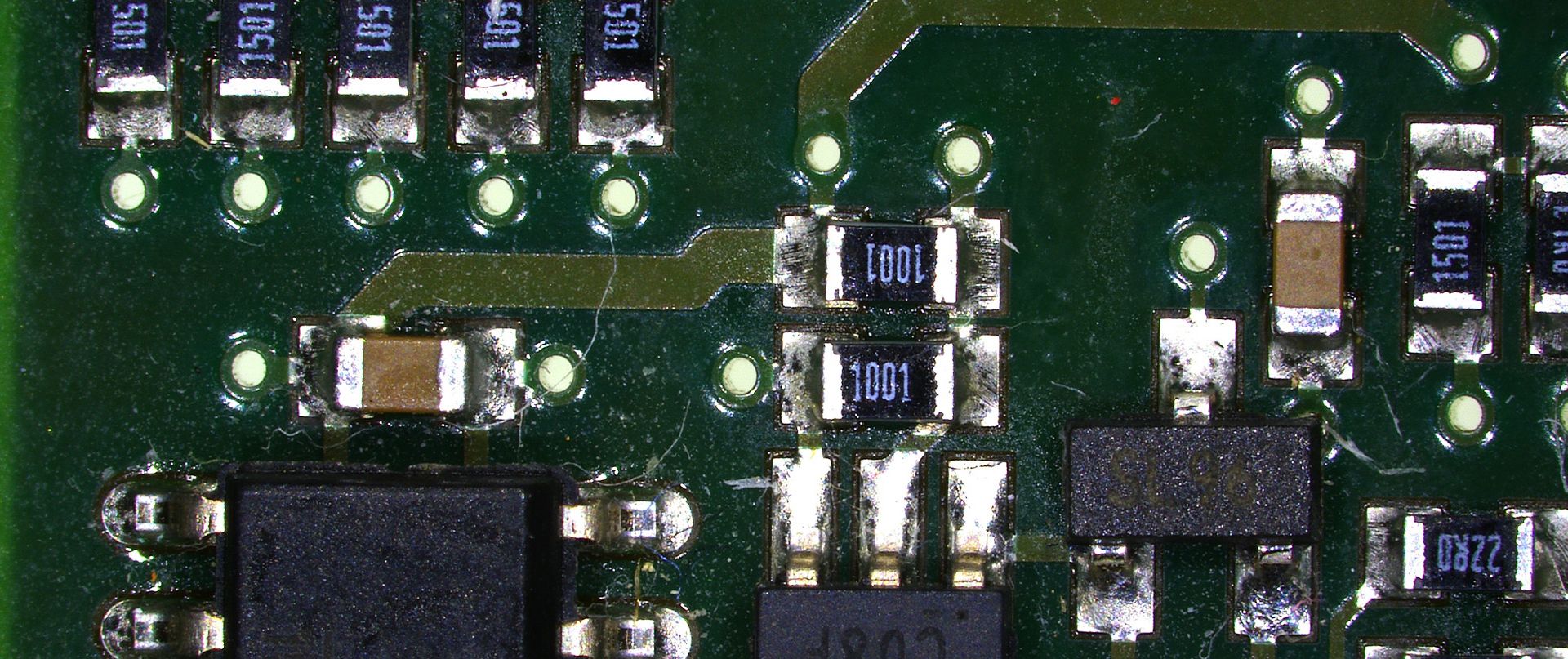
Electronics repair demands space for:
– Soldering iron
– Tweezers
– Fume extractor
Use 2x–10x stereo objectives with W.D. > 20 mm to maintain access and avoid lens damage.
Microdissection and Micromanipulation
Biological procedures like embryo injection require micropipettes and fine probes. LWD or stereo scopes allow tool insertion without collision.
Inspecting 3D or Thick Specimens
Samples like circuit boards, rock sections, or coins benefit from longer W.D. to focus across topography without hitting raised features.
Hollow Magnification: Preserve W.D. Without Gaining Detail
Increase Apparent Size Without Losing Clearance
Boost image size without reducing W.D. by using:
– Higher-power eyepieces (e.g., 15x)
– Zoom multipliers (e.g., 2x auxiliary lens)
– Digital zoom
This is hollow (or empty) magnification—it enlarges the image but does not improve resolution.
When to Use It—and When to Avoid
✅ Acceptable for:
– General inspection
– Tool alignment
❌ Not suitable for:
– Resolving fine details
– QA or medical inspections
Always use optical magnification (from objective) for true resolution.
Choose the Right Objective for Your Task
Prioritize W.D. for Tool Access
For tool-based work:
– Use low magnification (1x–10x)
– Select stereo or LWD objectives
– Aim for W.D. > 10 mm
Maximizing clearance prevents accidents and improves workflow.
Prioritize Resolution for Detail Work
For high-detail imaging:
– Use high-NA objectives
– Accept short W.D. (e.g., 0.1–0.7 mm)
– Avoid hollow magnification
Ensure specimen fits within mechanical limits.
Verify Before You Buy
When selecting a microscope:
– Check manufacturer datasheets for exact W.D.
– Request demo units or videos
– Test with your largest sample or tool
Vendors like Vision Engineering or Leica offer application support to match objectives to tasks.
Final Note: Working distance isn’t calculated—it’s specified. Always refer to the objective’s engraved label or manufacturer data sheet for accurate values. While magnification and NA help predict trends (higher = shorter W.D.), only direct specs or physical measurement deliver precision. For tool-based applications, prioritize long working distance objectives or stereo microscopes. For resolution-critical tasks, accept limited clearance but ensure optical magnification is used—not hollow enlargement. By matching working distance to your sample and workflow, you ensure both safety and performance in every observation.