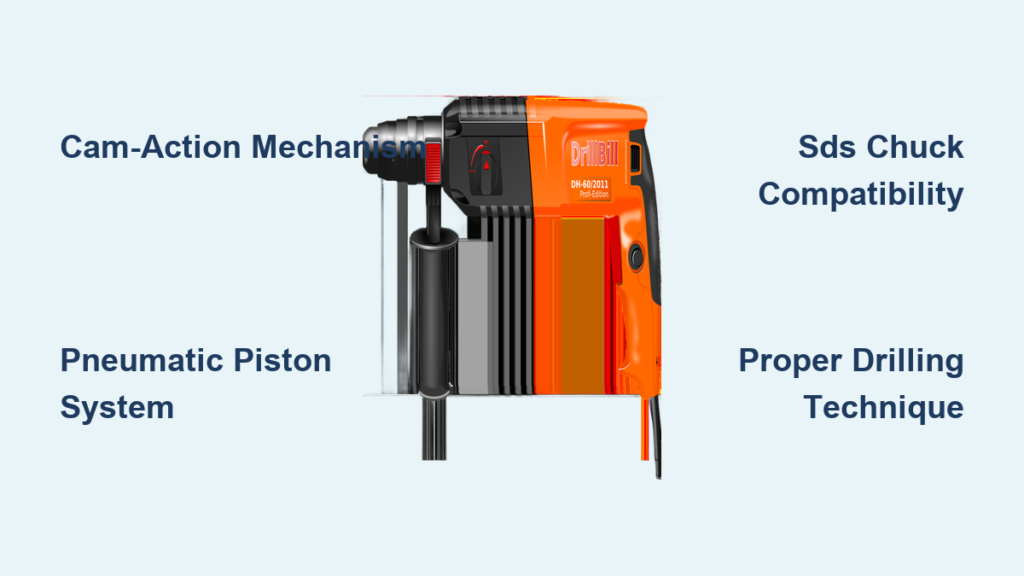
Ever tried drilling into concrete with a regular drill only to watch it stall while the bit smokes and dulls within seconds? You’re not alone. That frustrating experience is exactly why understanding how a hammer drill works is critical for anyone tackling masonry projects. Unlike standard drills that rely solely on rotation, hammer drills combine spinning motion with a powerful percussive action that literally pounds through concrete, brick, and stone. In this guide, you’ll discover the precise mechanical systems that generate thousands of hammer blows per minute, why some hammer drills outperform others on reinforced concrete, and exactly which tool you need for your specific project—whether you’re hanging a picture frame or installing electrical conduits in a concrete slab.
Why Rotation Alone Fails When Drilling Concrete Walls
Concrete isn’t just hard—it’s specifically designed to resist penetration. When your standard drill bit meets concrete, it doesn’t cut; it grinds against aggregate particles that are often harder than the bit itself. This creates excessive heat that dulls the bit while generating minimal progress. The critical difference with a hammer drill is its ability to fracture the concrete surface before the bit attempts to cut it.
The Physics Behind Concrete Drilling Failure
Your regular drill applies continuous rotational force without addressing concrete’s brittle nature. Concrete fails under impact, not shear force. When you apply pure rotation, you’re essentially trying to slice through material that responds better to fracturing. The hammer drill’s percussive action creates microscopic fractures in the concrete surface, allowing the bit to remove material in small chunks rather than trying to shear through intact concrete.
How Hammer Action Prevents Bit Glazing
One common issue DIYers face is “glazing,” where the bit’s cutting edges become smooth from constant friction against concrete. Hammer drills prevent this by ensuring the bit only contacts the concrete during the hammer stroke, not continuously. This intermittent contact keeps the bit cooler and maintains its cutting edge significantly longer. You’ll notice less smoke and heat when using proper hammer action, which directly translates to longer bit life.
Cam-Action Hammer Drills: The Secret Behind 50,000 Blows Per Minute
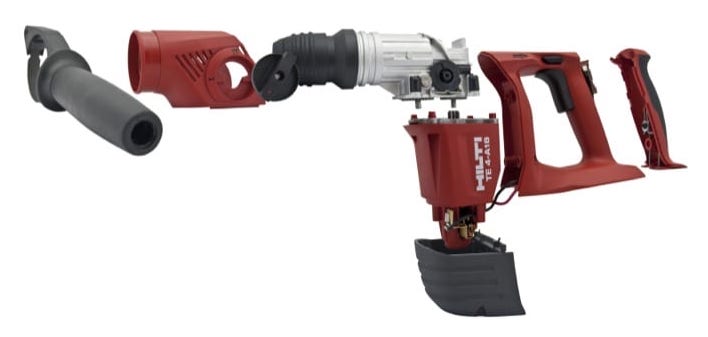
The mechanical hammer system found in most standard hammer drills creates astonishingly rapid impacts through an ingeniously simple mechanism. This is the technology that makes affordable hammer drills accessible to DIYers while still handling most masonry jobs effectively.
How the Cam Mechanism Generates High-Speed Impacts
Inside your hammer drill, two toothed discs—called cam plates—rotate against each other. One plate is fixed while the other spins with the motor. As these plates rotate, their teeth engage and then slip past each other. This slipping action creates a rapid back-and-forth motion that translates to the drill bit. Think of it like rapidly tapping your finger on a table—thousands of times per minute.
Performance Limits for DIY Concrete Projects
Your typical cam-action hammer drill delivers 20,000-60,000 blows per minute with 0.5-3 joules of impact energy per strike. This makes them perfect for:
– Drilling 3-10mm holes in brick or block walls
– Installing anchors for shelves or curtain rods
– Light concrete work like fence post anchors
However, when you hit reinforced concrete or need holes larger than 10mm, you’ll notice significantly slower progress and excessive vibration that fatigues your arms.
Pneumatic Hammer Mechanism: How Rotary Hammers Deliver 25+ Joules of Concrete-Breaking Power
Professional rotary hammers employ a fundamentally different system that trades speed for raw power. This is why contractors reach for rotary hammers when facing reinforced concrete or large-diameter holes.
The Piston-and-Striker System That Crushes Concrete
Inside a rotary hammer, an electric motor drives a piston that compresses air within a sealed cylinder. This compressed air then propels a free-floating striker toward the bit in a powerful, single impact. Unlike the cam system’s rapid tapping, this delivers a full “jackhammer” effect with each blow. The air cushion actually multiplies the force, creating that distinctive concrete-shattering impact you feel in your hands.
Real-World Performance Differences You’ll Notice
When drilling a 16mm hole in 32 MPa concrete to 120mm depth:
– A standard hammer drill takes 30-45 seconds
– A rotary hammer completes the same hole in just 15 seconds
This dramatic difference comes from the rotary hammer’s ability to deliver 2-25+ joules per blow (vs. 0.5-3 joules), making it 3-5 times more efficient on tough concrete. You’ll feel less vibration in your arms because the energy transfers directly to the concrete rather than bouncing back through the tool.
SDS vs. Standard Chucks: Why Your Hammer Drill Bit Keeps Slipping Out
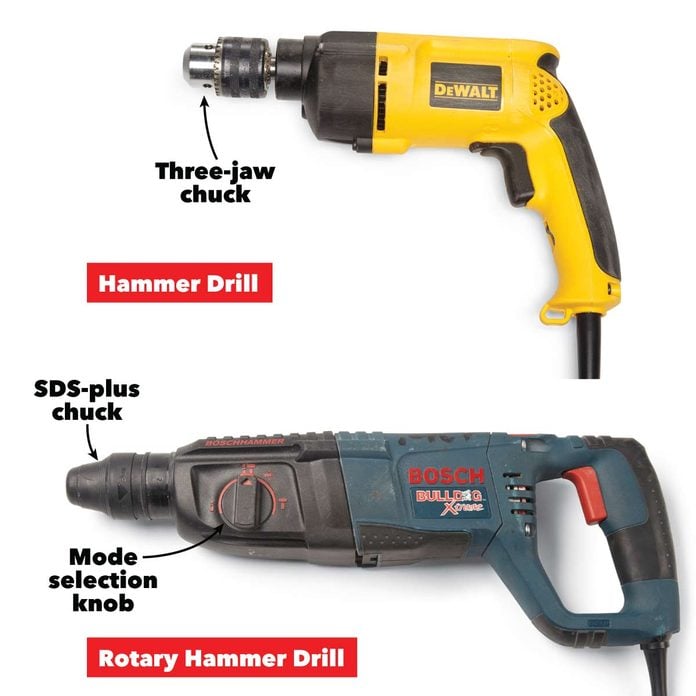
The chuck system determines whether your bit can actually deliver the hammering action to the work surface. This is where many DIYers make their first critical mistake when learning how a hammer drill works.
How SDS Chucks Transfer Percussive Energy Effectively
Standard chucks grip the bit along its entire shank, preventing the back-and-forth motion essential for hammer drilling. SDS systems (Special Direct System) use a grooved bit shank that locks into place while still allowing axial movement. When you select hammer mode, the chuck releases lateral grip while maintaining rotational hold, letting the bit slide forward and backward to deliver those critical impacts.
Choosing the Right Bit System for Your Project
- Standard chuck hammer drills: Use with standard masonry bits for holes up to 10mm in brick/block
- SDS-Plus: Ideal for 5-16mm holes in concrete (most common professional system)
- SDS-Max: Required for holes over 16mm or heavy demolition work
Attempting to use standard bits in hammer mode with a regular chuck will quickly damage both your bit and drill—always match your bit type to your tool’s capabilities.
Hammer Drill vs. Rotary Hammer: Which Tool Drills a 16mm Concrete Hole 3x Faster?
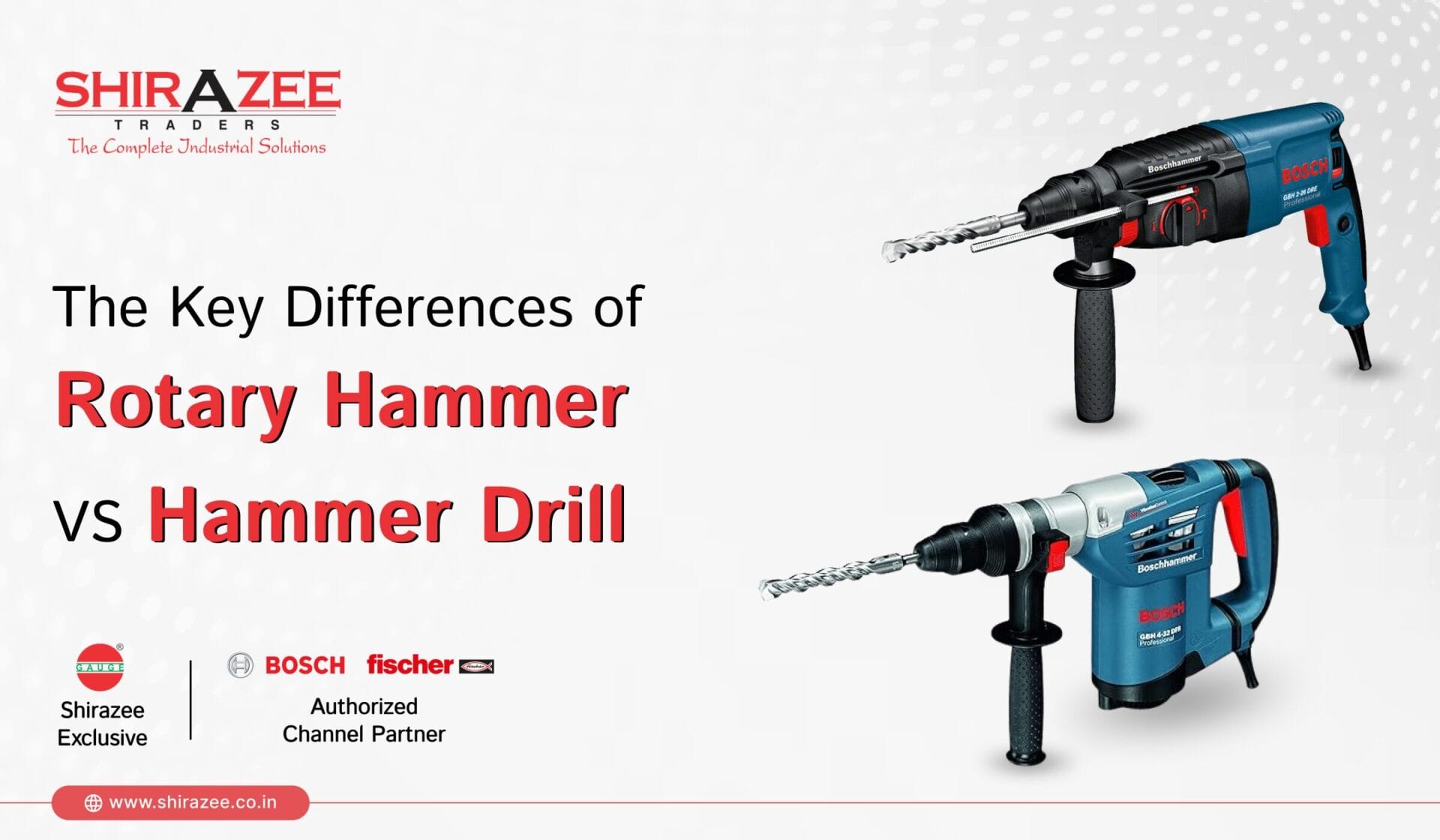
Most consumers don’t realize these are fundamentally different tools with distinct mechanisms. Choosing wrong means wasted time, damaged tools, and frustration on your project.
The Critical Performance Differences You Must Know
| Feature | Standard Hammer Drill | Rotary Hammer |
|---|---|---|
| Impact Mechanism | Cam/ratchet system | Pneumatic piston |
| Blows Per Minute | 20,000-60,000 | 1,000-5,000 |
| Impact Energy | 0.5-3 joules | 2-25+ joules |
| Best Hole Size | Up to 10mm | 10mm+ |
| Reinforced Concrete | Struggles severely | Handles easily |
| User Fatigue | High vibration | Lower vibration |
The counterintuitive truth? Fewer blows per minute (in rotary hammers) actually means faster drilling because each blow delivers substantially more energy to fracture the concrete.
Why Your Hammer Drill Overheats During Concrete Drilling (And How to Fix It)

Overheating is the #1 reason hammer drills fail prematurely during concrete work. Understanding the mechanics explains exactly how to prevent it.
The Heat Buildup Problem in Hammer Mode
When you apply excessive forward pressure, you’re essentially pressing the bit so hard against the concrete that it can’t retreat during the hammer cycle. This binds the mechanism, converting all that percussive energy into heat instead of concrete fracturing. You’ll notice the drill smoking and the bit glowing red—clear signs you’ve compromised the hammer mechanism’s function.
Proper Drilling Technique to Prevent Overheating
- Apply light, consistent pressure—just enough to keep the bit engaged
- Let the tool do the work—fighting the drill’s natural rhythm increases heat
- Withdraw periodically—every 2-3 seconds for deep holes to clear dust
- Use dust extraction—concrete dust acts as an insulator, trapping heat
Following these steps ensures the hammer mechanism operates within its design parameters, dramatically extending both tool and bit life.
7 Concrete Drilling Mistakes That Destroy Hammer Drill Bits in Minutes
Even with the right tool, improper technique can render expensive masonry bits useless after just one hole. These mistakes directly interfere with how a hammer drill works.
The Most Costly Drilling Errors You’re Probably Making
Starting without a pilot point: Concrete’s smooth surface makes bits “walk” sideways, rounding the cutting edge. Always start with a center punch or small pilot hole.
Using standard twist bits: These lack carbide tips and will dull in seconds. Only use carbide-tipped masonry bits designed for hammer action.
Drilling too fast: High RPM without sufficient hammer impact causes glazing. Match speed to material—lower RPM for concrete.
Ignoring dust clearance: Packed holes increase resistance, overheating both bit and drill. Clear dust every 1-2 inches of depth.
Applying excessive pressure: This binds the hammer mechanism, converting energy to heat instead of concrete fracturing.
Using worn bits: Dull bits require more force, increasing heat and vibration. Replace bits when cutting edges show significant wear.
Drilling near rebar: Hitting steel reinforcement instantly damages carbide tips. Always scan for rebar before drilling concrete.
Choosing Between Corded vs. Cordless Hammer Drills for Concrete Projects
Power source decisions directly impact your hammer drill’s performance and longevity when tackling concrete.
When Corded Wins for Heavy Concrete Work
Corded hammer drills deliver consistent power without voltage drop, essential for sustained concrete drilling. They typically offer higher impact energy (2-3+ joules) and can handle continuous operation without overheating. For drilling multiple holes in concrete walls or slabs, corded models complete the job faster with less user fatigue.
Cordless Advantages for Occasional Masonry
Modern 18V/20V MAX cordless hammer drills have closed the performance gap significantly. With 1.5-2.5 joules of impact energy, they handle most DIY brick and block projects admirably. The convenience of no cords makes them ideal for:
– Hanging pictures or shelves on masonry walls
– Occasional anchor installations
– Projects where power outlets are scarce
However, when drilling more than 5-6 holes in concrete, cordless models often require battery changes that slow your progress.
Understanding how a hammer drill works transforms you from someone who merely operates the tool to a knowledgeable user who maximizes its potential. The key insight is recognizing that concrete drilling success depends on matching the right hammer mechanism—cam-action for light masonry or pneumatic for serious concrete work—to your specific project. Always use proper drilling technique with light pressure, appropriate bits, and regular dust clearance to protect both your tool and your results. Whether you’re a DIYer hanging shelves or a contractor installing conduit, selecting the right hammer drill type and using it correctly means the difference between frustrating struggle and clean, efficient holes every time. Remember: it’s not just about spinning the bit—it’s about delivering those precise, powerful blows that actually break concrete.